Presentation: The Right 300 Tokens Beat 100k Noisy Ones: The Architecture of Context Engineering
Our take
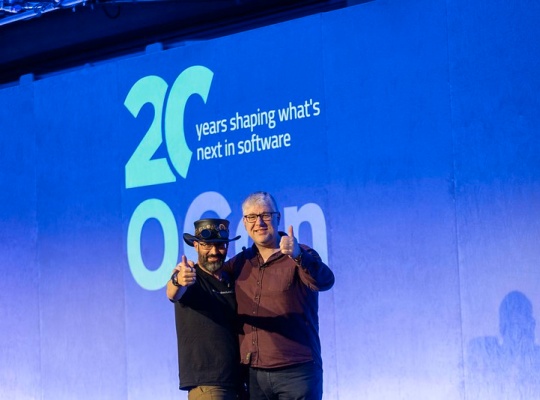
The recent discussion by Baruch Sadogursky and Patrick Debois on “The Architecture of Context Engineering” highlights a critical bottleneck in the current trajectory of coding agents. While the hype around ever-expanding context windows in large language models (LLMs) continues, this presentation offers a refreshing and pragmatic corrective. The core argument – that a carefully curated 300 tokens can often outperform a deluge of 100,000 noisy ones – resonates deeply with those of us building practical AI-powered workflows. The issue isn’t simply about scale; it’s about quality and relevance. This aligns with observations in recent explorations of model efficiency, such as Google’s rollout of Gemini 3.7 Flash [Google’s Gemini 3.7 Flash targets coding and agents with a 50% introductory price cut], demonstrating a growing recognition of the value of specialized, focused models over brute-force scaling. Understanding how to engineer that context, as Sadogursky and Debois outline, is becoming increasingly vital. Furthermore, Capital One’s approach to building a multi-agent AI platform around open-weight models [Why Capital One built its multi-agent AI platform around open-weight models] underscores a broader shift toward prioritizing control and customization over relying solely on proprietary, massive models.
The proposed solutions – lazy-loaded skills, versioned context artifacts, externalized memory banks, and LLM-as-a-judge evaluations – aren’t revolutionary concepts in isolation, but their synthesis into a cohesive architecture for context engineering is genuinely valuable. The emphasis on treating LLMs as components within a larger system, rather than monolithic problem solvers, is a crucial shift in mindset. It moves beyond the simplistic prompt engineering paradigm and towards a more robust and maintainable approach. We’ve seen similar debates unfold around frameworks like LangChain and LangGraph [LangChain vs LangGraph: 4 Key Differences and When to Use Each], which offer different tools for orchestrating agentic workflows, but often lack the architectural rigor discussed by Sadogursky and Debois. The ability to transform raw markdown files into reliable agentic workflows speaks to a tangible, practical application, moving beyond theoretical discussions and into the realm of real-world implementation. This is particularly important for organizations looking to build scalable and dependable AI solutions.
The significance of this work extends beyond simply improving the performance of coding agents. It points to a broader need for a more nuanced understanding of how LLMs interact with their environment and how to manage the flow of information within complex systems. The current trend of simply throwing more data at the problem is unsustainable and, as this presentation demonstrates, often counterproductive. Effective context engineering requires a deliberate and thoughtful approach, prioritizing relevance, versioning, and modularity. This resonates with the broader challenges of data management – ensuring that the right information is available at the right time, in the right format, to support informed decision-making. The principles outlined by Sadogursky and Debois offer a framework for applying these same principles to AI-powered workflows, fostering greater control and predictability.
Looking ahead, the challenge lies in operationalizing these principles at scale. Building robust context engineering pipelines will require new tooling, automated workflows, and a shift in skillsets within engineering teams. The rise of LLM-as-a-judge evaluations suggests a potential avenue for automating the process of context optimization, but further research is needed to refine these techniques. Will we see the emergence of dedicated “context engineers” – specialists responsible for designing and maintaining the information architecture that underpins AI-powered systems? And more importantly, how can we empower all developers to adopt these practices, ensuring that the potential of AI agents is unlocked without sacrificing reliability and maintainability?
Baruch Sadogursky and Patrick Debois discuss why coding agents fail due to bloated context windows and stuffed prompts. They explain practical context engineering fixes, including lazy-loaded skills, versioned context artifacts, externalized memory banks, and LLM-as-a-judge evals. Software architects & engineering leaders will learn how to turn raw markdown files into reliable agentic workflows.
By Patrick Debois, Baruch SadogurskyRead on the original site
Open the publisher's page for the full experience