What We Can Learn From Google Engineers’ Indispensible Prompts
Our take
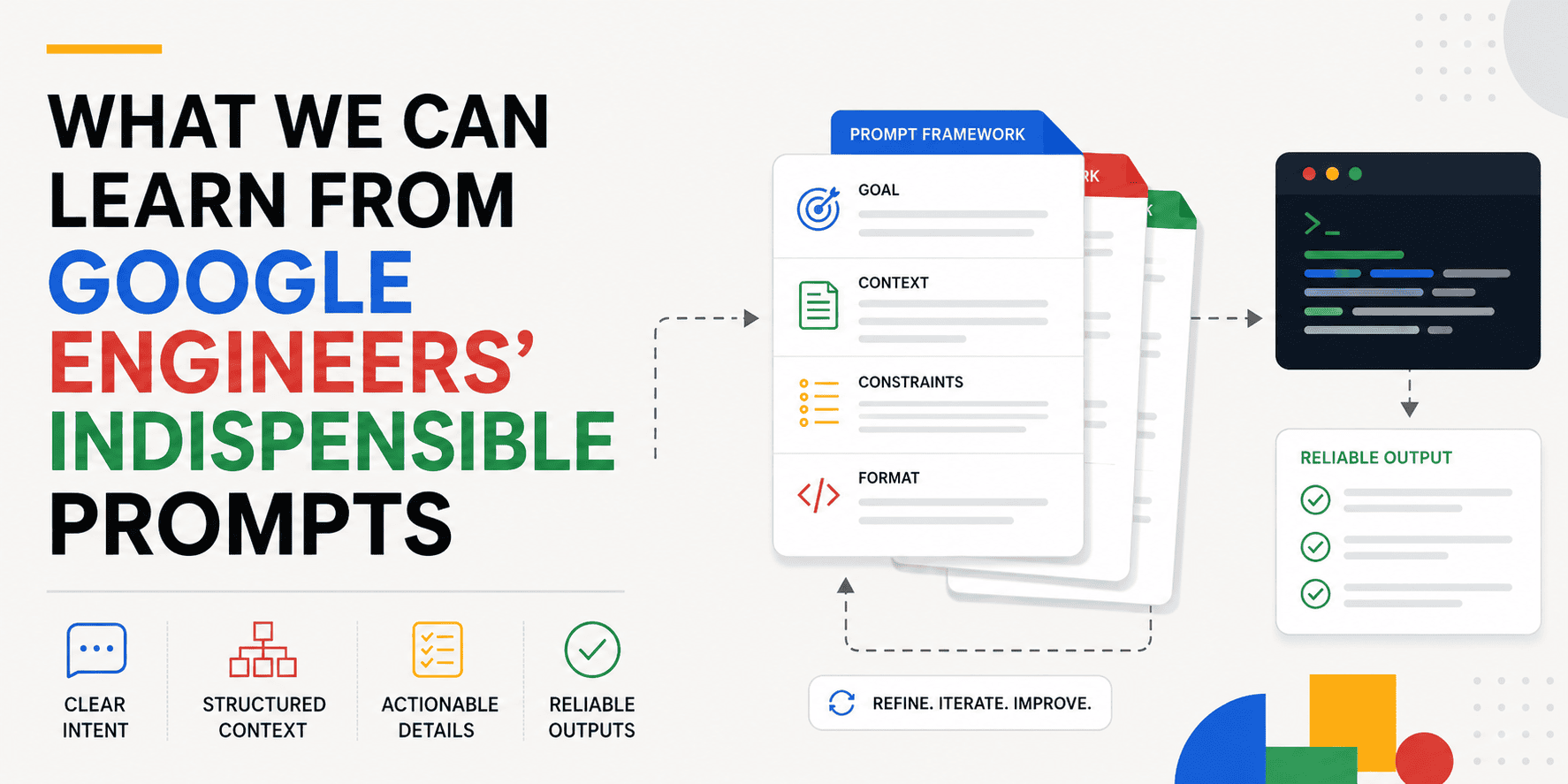
The recent query posed to Google engineers – “What prompt do you personally refuse to work without, and why?” – offers a surprisingly insightful window into the practical application of large language models (LLMs) within the very company that pioneered them. It's far more valuable than simply collecting a list of favorite prompts; it highlights a shift towards a more pragmatic and user-driven approach to AI development. The responses, we suspect, will reveal a focus on prompts that enhance efficiency, streamline workflows, and ultimately, make the engineers’ lives easier. This echoes the broader trend we’re seeing, where the initial hype around transformative AI is giving way to a more grounded exploration of how these tools can genuinely integrate into existing processes. Understanding these practical applications is crucial, and it’s helpful to consider how this aligns with concepts explored in our recent piece, 10 Essential Agentic AI Concepts Explained Simply, which highlights the growing importance of AI agents in automating complex tasks.
The significance of this simple question lies in its ability to circumvent the often-overblown rhetoric surrounding AI. We’re constantly bombarded with claims of “revolution” and “game-changing” technology, but rarely do we hear about the everyday tools that actually empower users. This exercise, by focusing on individual preferences and practical use cases, bypasses the marketing noise and gets to the heart of what’s truly valuable. It also subtly underscores the iterative nature of AI development. Prompts aren't set in stone; they're refined and adapted based on experience. This echoes the current landscape where companies like OpenAI are adapting to user behavior, as evidenced by their recent decision to OpenAI to start showing ads on ChatGPT’s free and Go tiers in India. The focus shifts from solely pursuing the "perfect" model to optimizing the user experience, even if it involves adjustments like introducing advertising. It’s a pragmatic recognition that AI’s long-term success depends on its ability to be both powerful and sustainable.
Beyond the immediate insights into Google’s internal practices, this initiative speaks to a broader cultural shift within the AI community. The rapid proliferation of AI startups, exemplified by the recent funding round for Instinct Viral AI startup Instinct has raised $350 million at a 2.5 billion valuation, demonstrates the intense competition to develop practical applications. While valuations and hype cycles can be fleeting, the underlying drive to solve real-world problems with AI is undeniable. This focus on utility, rather than abstract innovation, is essential for fostering long-term adoption and trust. Asking engineers about their indispensable prompts is a surprisingly effective method for identifying those utility hotspots – the tasks where AI demonstrably improves efficiency and productivity.
Ultimately, the responses to this query will likely reveal a recurring theme: prompts that automate repetitive tasks, facilitate rapid prototyping, and aid in debugging. These aren’t flashy applications, but they represent the quiet revolution happening behind the scenes – the gradual integration of AI into the fabric of everyday work. As LLMs become increasingly sophisticated, the emphasis will shift from crafting complex models to mastering the art of prompt engineering, a skill that will be as valuable as coding itself. The question we should now be asking isn't just what prompts engineers rely on, but how we can empower everyone – not just engineers – to harness the power of prompt engineering to transform their own data journeys.
Read on the original site
Open the publisher's page for the full experience