5 Free Courses to Go From LLM Beginner to Practitioner
Our take
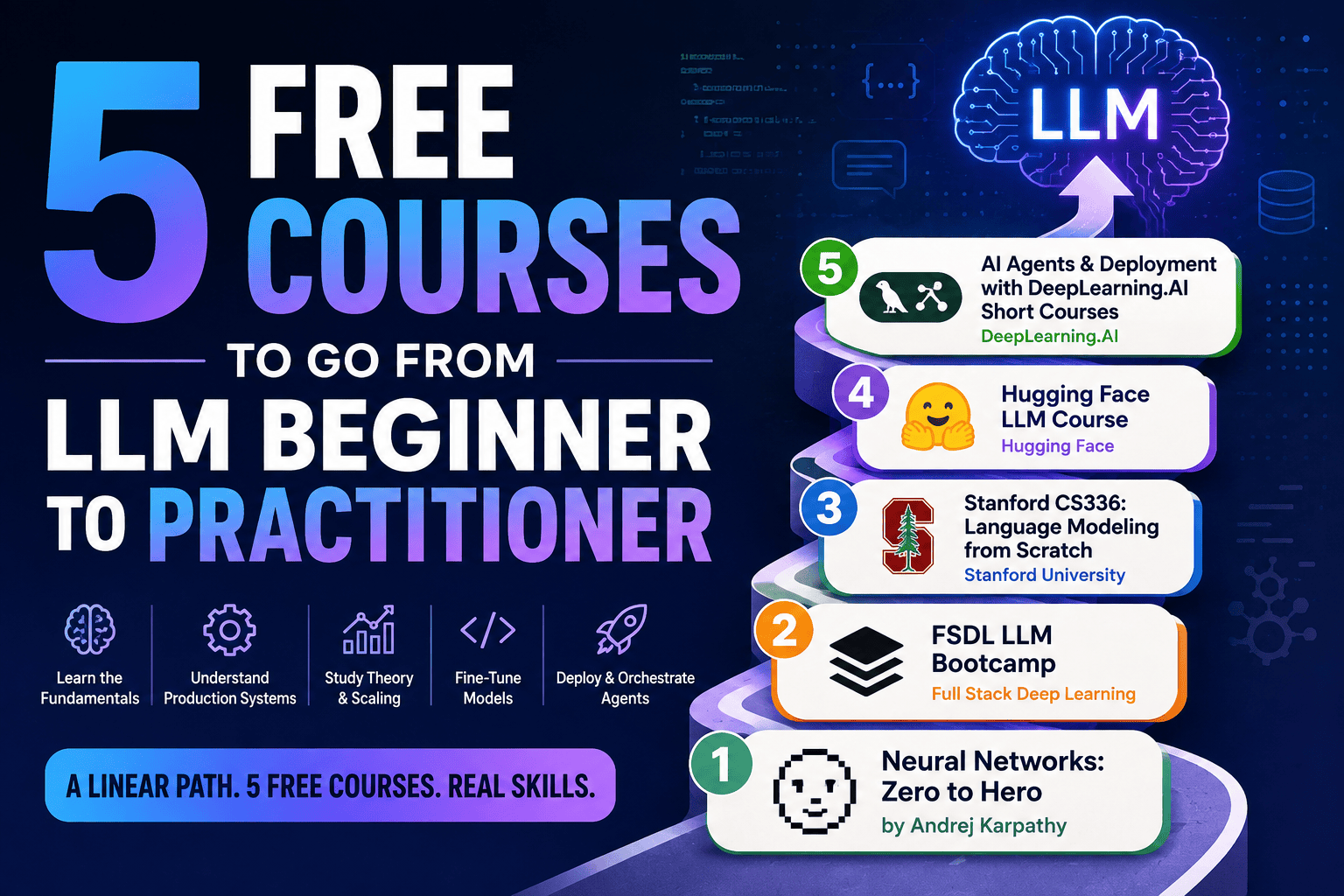
The recent proliferation of Large Language Models (LLMs) has created a fascinating paradox: unprecedented access to powerful AI tools alongside a significant knowledge gap in understanding how to effectively utilize them. The curated pipeline of free courses outlined in “5 Free Courses to Go From LLM Beginner to Practitioner” directly addresses this, offering a structured path from foundational concepts to practical application. It's a welcome development, particularly given the often fragmented and overwhelming nature of online learning resources. This isn't just about learning *about* LLMs; it's about building the skills to actually *work* with them. The trend of democratizing AI education is crucial, and this type of curated learning experience is a significant step forward. We’ve previously explored the importance of human oversight in this evolving landscape, noting how [Rigorous Yet Sustainable Human Reviews in the AI Era] can keep development teams sharp and maintain quality even as AI velocity increases. Understanding the underlying mechanics, as these courses provide, is essential for informed and responsible integration of these powerful tools. Furthermore, the flexibility of tools like [OpenCode Explained: The Open-Source AI Coding Agent] to work with any model highlights the importance of a strong foundational understanding – it's not just about picking the "best" model, but about knowing how to leverage any model effectively.
The significance of this progression from theory to practice cannot be overstated. Many individuals and organizations are understandably eager to leverage LLMs to improve productivity and unlock new capabilities. However, a superficial understanding can lead to inefficient implementations, unexpected biases, and ultimately, a failure to realize the potential benefits. This curated pipeline recognizes that genuine proficiency requires a solid grasp of the underlying principles, including concepts like backpropagation, which are often glossed over in introductory material. By offering a clear, linear progression, it empowers users to move beyond simply prompting LLMs and towards building custom applications and workflows. The recent concerns raised regarding [OpenAI’s new reasoning technique alarms AI safety experts] underscore the need for a deeper understanding of these models – not just their capabilities, but also their potential limitations and risks. A more informed user base, equipped with the knowledge gained through resources like these, is better positioned to mitigate those risks and ensure responsible AI development.
The accessibility of these free courses is particularly noteworthy. While proprietary LLM platforms offer impressive capabilities, the cost of access and the lack of transparency can be prohibitive for many. Open-source models and the resources to learn how to use them are leveling the playing field, allowing a broader range of individuals and organizations to participate in the AI revolution. This shift towards democratization is not just about economic accessibility; it’s also about fostering a more diverse and inclusive AI ecosystem. By providing a clear pathway to LLM proficiency, these courses empower individuals from various backgrounds to contribute to the development and application of this transformative technology. The ability to build, customize, and deploy LLMs independently fosters innovation and reduces reliance on centralized platforms, ultimately accelerating the pace of progress.
Looking ahead, the challenge will be to continue refining these educational pipelines to keep pace with the rapid evolution of LLM technology. As models become increasingly complex and specialized, the need for targeted training and practical experience will only grow. We should anticipate a rise in specialized courses focusing on specific LLM applications, such as code generation, content creation, and conversational AI. The question becomes: how can we ensure that these educational resources remain accessible and adaptable, empowering a continually expanding community of LLM practitioners to shape the future of AI?
Read on the original site
Open the publisher's page for the full experience