How I Built a Multi-Agent System for Interrupted Time Series Analysis (ITSA)
Our take
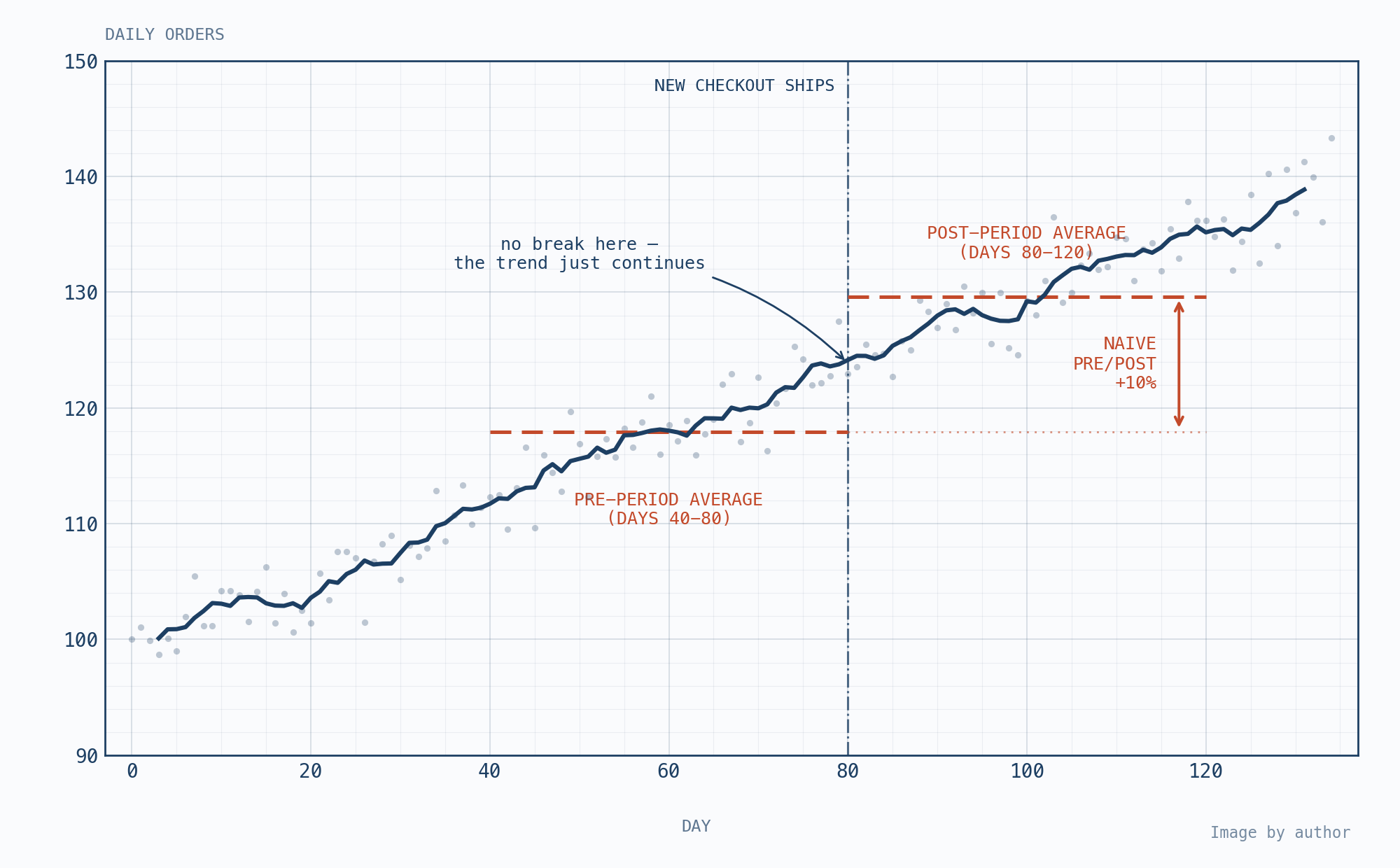
The recent Towards Data Science piece detailing the construction of a Multi-Agent System for Interrupted Time Series Analysis (ITSA) is a compelling illustration of how counterfactual analysis, once largely confined to academic research, is steadily maturing into practical AI products. The author’s deep dive into the architectural challenges and solutions involved in building such a system highlights the complexities of translating theoretical frameworks into robust, deployable tools. This work builds on foundational concepts explored in other areas, such as the growing interest in data lakehouse architectures—as demonstrated by the recent exploration of Building a Data Lakehouse with DuckDB and DuckLake—and the broader conversation around responsible AI development, a topic increasingly relevant given initiatives like Base Labs launches an open-weight AI safety partnership with Hugging Face and Goodfire. The ability to accurately model “what if” scenarios in time series data has profound implications for industries ranging from finance and healthcare to marketing and operations, allowing for more informed decision-making and proactive risk mitigation.
The core innovation of the ITSA system—leveraging a multi-agent approach—is particularly noteworthy. Traditional time series analysis often struggles with interventions or events that disrupt the natural flow of data. ITSA’s agent-based architecture allows for a more nuanced exploration of these interruptions, simulating the effects of different interventions and providing a richer understanding of causality. This moves beyond simple correlation analysis, providing a framework for truly understanding *why* certain events occurred and how they impacted outcomes. The author’s focus on practical implementation details – the selection of appropriate agents, the design of their interactions, and the handling of computational complexity – underscores the real-world challenges of building such systems. It’s a far cry from the purely theoretical discussions often found in academic literature, and a testament to the growing maturity of applied AI. Even the evolving perspectives on AI itself, as evidenced by observations like Even the King of England has his hesitations about AI, suggest a growing need for robust and explainable models like ITSA.
The broader significance of this development lies in its contribution to the democratization of advanced analytical techniques. Counterfactual analysis has historically been the domain of specialized statisticians and data scientists. ITSA, and similar efforts, are paving the way for more accessible tools that empower a wider range of users to leverage the power of “what if” scenarios. This shift will be crucial for driving innovation across industries, enabling businesses to make more data-driven decisions and adapt more effectively to changing conditions. The move toward AI-native spreadsheets and data management platforms is intrinsically linked to this trend; simplifying complex analytical methods and making them readily available within familiar workflows is essential for widespread adoption. The ability to rapidly prototype and test different intervention strategies, facilitated by systems like ITSA, will become increasingly valuable in a world characterized by uncertainty and rapid change.
Looking ahead, the biggest challenge will likely be scaling these multi-agent systems to handle increasingly complex and high-dimensional time series data. The computational demands of simulating numerous “what if” scenarios can be substantial. Furthermore, ensuring the robustness and reliability of these systems—particularly in the face of noisy or incomplete data—will be paramount. One question worth watching is how these agent-based approaches will integrate with emerging techniques in causal inference and reinforcement learning, potentially leading to even more sophisticated and adaptive decision-making systems. The progress highlighted by the ITSA project is a strong indicator that we are entering a new era of data-driven decision-making, one where the ability to simulate and understand the consequences of our actions will be a critical competitive advantage.
What it takes to turn counterfactual analysis into an AI product
The post How I Built a Multi-Agent System for Interrupted Time Series Analysis (ITSA) appeared first on Towards Data Science.
Read on the original site
Open the publisher's page for the full experience