How to Run 10+ Claude Code Sessions Without a Powerful Computer
Our take
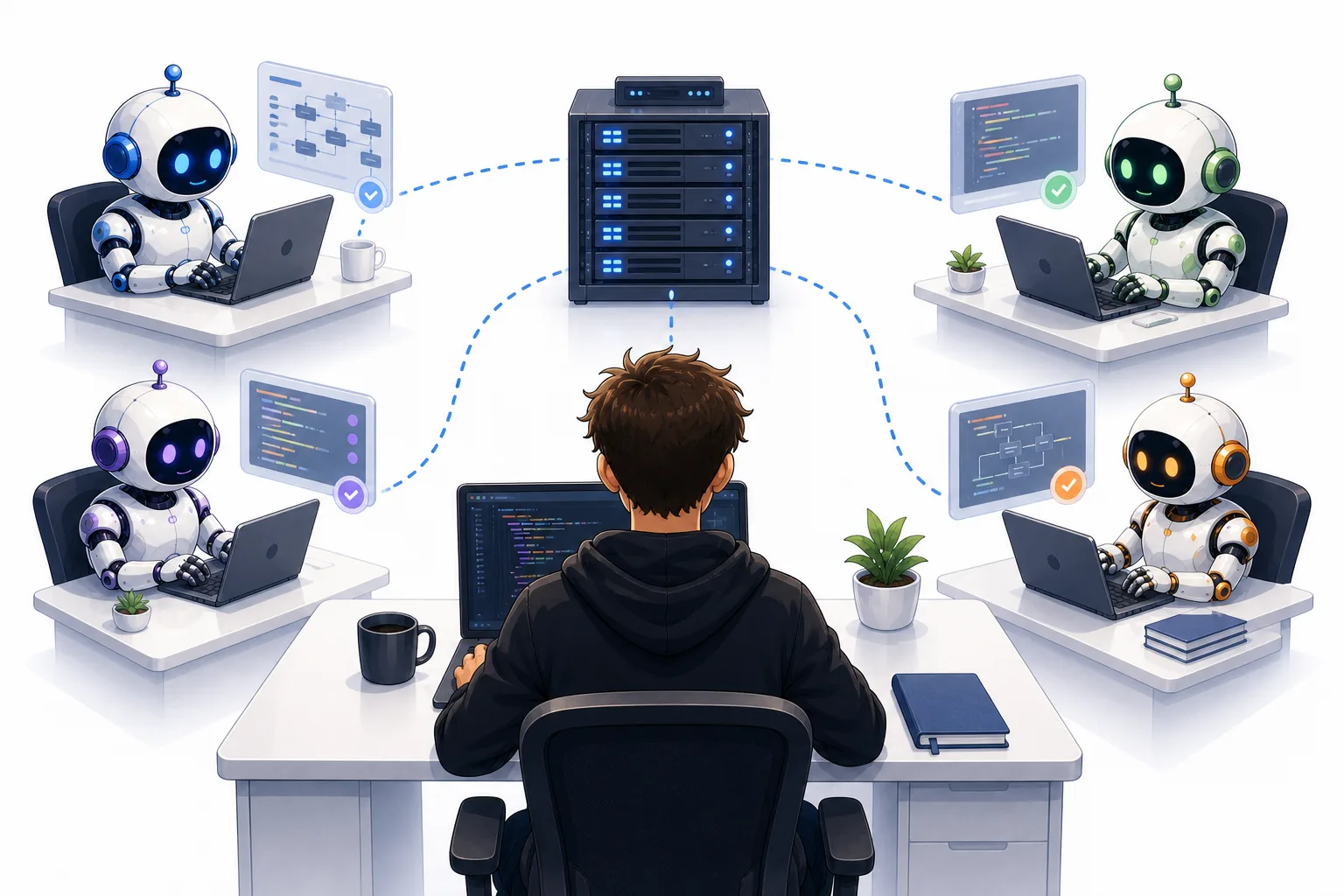
The recent Towards Data Science piece, "How to Run 10+ Claude Code Sessions Without a Powerful Computer," speaks to a growing accessibility trend in the AI agent space—a trend we’re actively watching. The ability to leverage large language models (LLMs) like Claude for coding tasks is increasingly valuable, but the computational demands have historically presented a barrier to entry for many. This article highlights a practical approach to circumventing that barrier, utilizing techniques like asynchronous execution and clever resource management to distribute workloads across less powerful hardware. It’s a welcome development, particularly when considered alongside recent announcements like [OpenAI launches Astra, its powerful (and controversial) new model], which demonstrates the sheer scale of compute required for leading-edge models, and Meta's ongoing efforts with Muse Spark, as detailed in [Meta says Muse Spark 1.3 has frontier performance — but its best results come from a model developers can’t broadly use yet]. The core takeaway isn’t just about running more instances; it’s about democratizing access to AI-powered coding assistance.
The brilliance of the approach outlined in the article lies in its pragmatism. Rather than chasing ever-more-powerful hardware, it focuses on optimizing software and workflow to achieve a desired outcome. This echoes a broader shift within the AI community—a move away from solely focusing on model size and towards exploring techniques like quantization, distillation, and efficient inference to make these technologies more widely usable. While the performance of individual agents might be slightly reduced compared to running them on high-end machines, the ability to orchestrate numerous agents concurrently unlocks entirely new possibilities for tasks like automated code review, parallel debugging, and even the creation of complex AI-driven software development pipelines. The article’s focus on practical implementation, providing concrete steps for readers to follow, is particularly valuable and distinguishes it from more theoretical discussions of distributed AI.
The implications extend beyond individual developers. Businesses, particularly smaller ones, can now explore the benefits of AI-assisted coding without incurring significant infrastructure costs. This lowers the barrier to adopting AI tools, potentially accelerating innovation and improving developer productivity across a wider range of organizations. Consider the implications for education, where students can experiment with coding agents without needing access to expensive computers. Furthermore, this trend highlights the increasing importance of orchestration and workflow management tools—the ability to efficiently manage and coordinate multiple AI agents becomes a critical skill in the future of software development. As Meta’s work with Muse Spark shows, pushing the boundaries of AI performance often requires specialized infrastructure; however, the ability to effectively utilize existing resources, as demonstrated in this article, is equally vital for widespread adoption.
Ultimately, the article serves as a powerful reminder that innovation isn't always about building bigger and better models. Sometimes, it's about finding smarter ways to leverage the tools we already have. The ability to run numerous Claude code sessions on modest hardware represents a significant step towards making AI-powered coding assistance more accessible and practical for everyone. A key question moving forward is whether these optimization techniques can continue to keep pace with the ever-increasing demands of newer, more sophisticated LLMs, and how the tooling around managing these distributed agent systems will evolve to meet the challenges ahead.
Learn how to run a lot of parallel coding agents without expensive, powerful hardware at home
The post How to Run 10+ Claude Code Sessions Without a Powerful Computer appeared first on Towards Data Science.
Read on the original site
Open the publisher's page for the full experience