Linear Discriminant Analysis (LDA) in Real-Life: Dimensionality Reduction in a Real-Estate Dataset
Our take
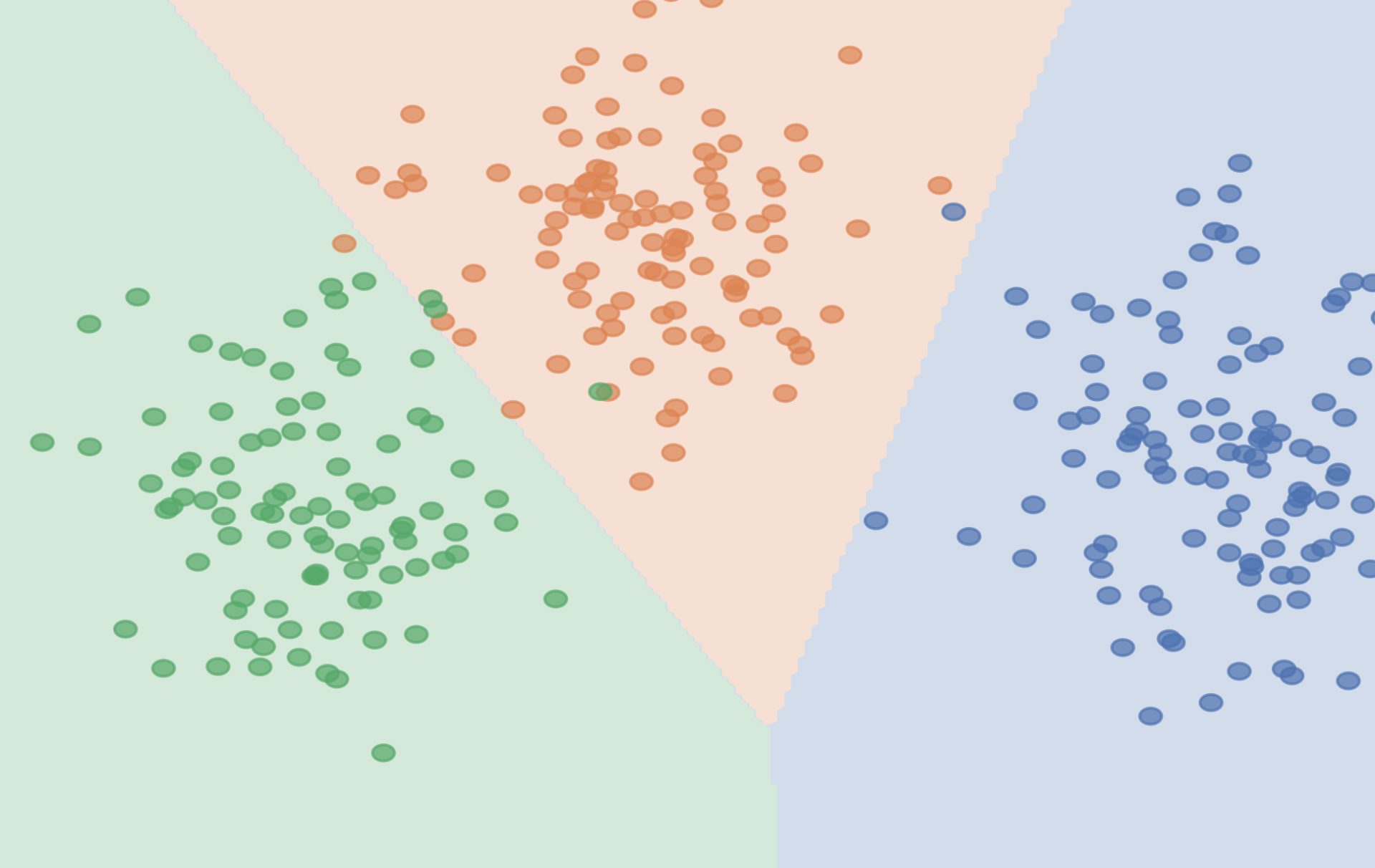
The recent Towards Data Science piece exploring Linear Discriminant Analysis (LDA) within a real-estate dataset provides a practical demonstration of a powerful dimensionality reduction technique. It’s encouraging to see these statistical methods applied to tangible, relatable scenarios—moving beyond abstract theory and showcasing their utility in solving real-world problems. The core concept, reducing the number of variables while retaining class separability, is fundamental to efficient data analysis and model building. This resonates particularly well with our audience who are often grappling with datasets that are rich in features but computationally burdensome. Understanding how to intelligently reduce dimensionality is a key skill for anyone looking to build robust and scalable AI solutions, and this article offers a clear, accessible entry point. For those interested in broader approaches to optimization, we've previously explored Dynamical System Transfer Learning with Reduced Order Models which offers a compelling perspective on reinforcement learning challenges, and how reduced order models can unlock new efficiencies. Similarly, the advancements in security architectures discussed in Beyond Zero: Google Publishes Successor to BeyondCorp highlight the importance of efficient resource management, a parallel concern in data science.
LDA’s elegance lies in its simplicity and efficiency. Unlike more complex dimensionality reduction methods like t-SNE or UMAP, LDA operates under the assumption of normally distributed data and aims to maximize the separation between classes. This makes it computationally less demanding and, crucially, more interpretable. The real-estate example—predicting property values or classifying property types—is a strong choice because it’s a domain many readers will be familiar with, even if they aren't data scientists. The ability to distill a complex dataset of features (square footage, location, number of bedrooms, etc.) into a smaller set of components that still accurately represent the underlying patterns is invaluable. This isn’t merely about speeding up model training; it’s about uncovering the truly significant variables that drive the outcome, leading to a deeper understanding of the data itself. This focus on interpretability is increasingly important as AI models are deployed in higher-stakes scenarios where transparency and explainability are paramount.
The article rightly emphasizes the importance of feature selection *before* applying LDA. While LDA is an effective dimensionality reduction tool, it's not a substitute for careful data preprocessing and feature engineering. Understanding the domain, identifying irrelevant or redundant features, and transforming variables appropriately are all crucial steps in ensuring that LDA produces meaningful results. Furthermore, the article's focus on classification problems highlights a key application area for LDA, but it's worth noting that the underlying principles can be adapted to regression tasks as well. The broader trend here is a shift towards more efficient and targeted data analysis—moving away from brute-force approaches and embracing techniques that prioritize both accuracy and interpretability. The emergence of tools like JupyterGIS and its focus on collaborative workflows, as demonstrated in Redefining GIS: Declarative Symbology and Collaborative Workflows in JupyterGIS, further emphasizes this need for streamlined and insightful data exploration.
Looking ahead, the integration of LDA—and similar dimensionality reduction techniques—with automated machine learning (AutoML) platforms will likely become increasingly prevalent. AutoML tools are already simplifying the model building process for many users, and incorporating efficient dimensionality reduction methods will further enhance their capabilities, enabling users to tackle more complex datasets with greater ease. The challenge will be to ensure that these automated processes maintain transparency and allow users to understand *why* certain features are selected and how dimensionality reduction impacts the final model. The future of data management isn't just about processing massive volumes of data; it's about extracting meaningful insights and empowering users to act on them—and techniques like LDA will play a vital role in that journey. A compelling question to watch is how these dimensionality reduction methods will evolve to handle increasingly complex data types, such as unstructured text and images, where the underlying patterns are less obvious and the dimensionality is significantly higher.
Using LDA for dimensionality reduction in classification problems
The post Linear Discriminant Analysis (LDA) in Real-Life: Dimensionality Reduction in a Real-Estate Dataset appeared first on Towards Data Science.
Read on the original site
Open the publisher's page for the full experience