QCon AI Boston: Production AI Moves Beyond Prompts to Platforms, Harnesses, and Evals
Our take
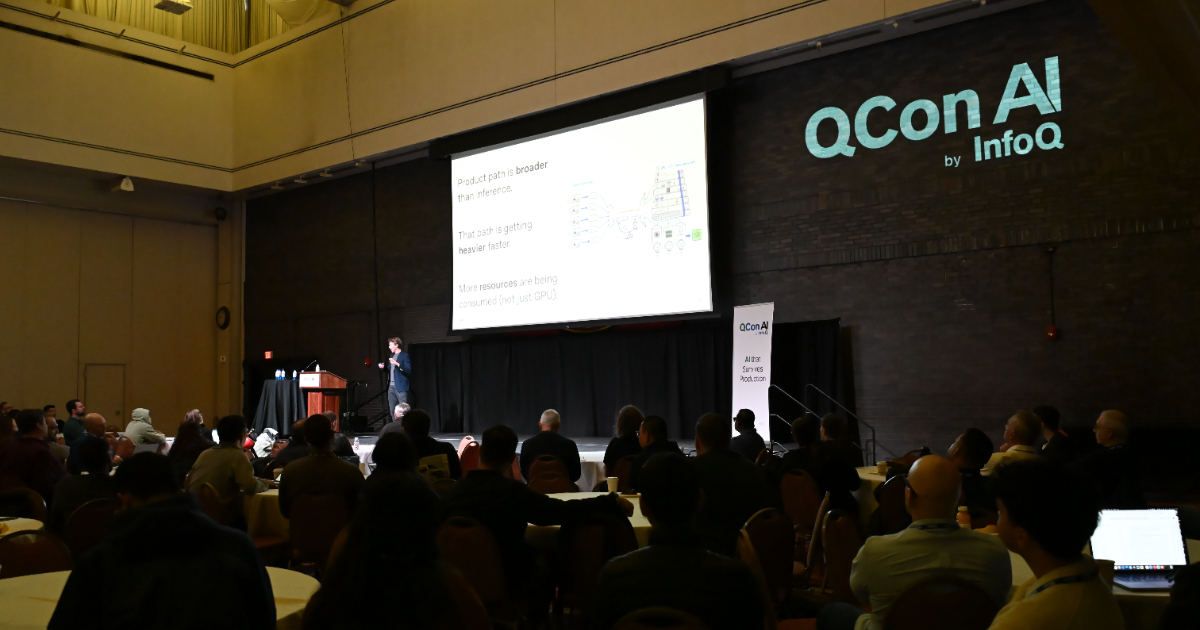
The shift highlighted at QCon AI Boston 2026—moving beyond simple prompt-based interactions to robust AI agent platforms—represents a crucial maturation of the field. For too long, the conversation around AI has been dominated by the excitement of the initial "wow" factor, exemplified by tools like OpenAI’s recent foray into hardware, as seen in Why is OpenAI selling a ChatGPT basketball?. However, the reality of deploying AI agents at scale, particularly within enterprise environments, demands a far more rigorous and engineered approach. The emphasis on production infrastructure, context management, and crucially, security, underscores the move from experimentation to practical application. This isn't about whether AI *can* do something; it’s about whether it *should*, and how we ensure it does so responsibly and reliably. The recent findings detailed in The agent security gap: 54% of enterprises have already had an AI agent incident, and most still let agents share credentials should serve as a stark reminder that security cannot be an afterthought.
The concept of an “AI harness,” as discussed at QCon, feels particularly significant. It’s a pragmatic response to the inherent risks of granting increasing autonomy to AI agents, particularly when those agents have access to sensitive data and critical systems. This framework acknowledges that simply containing AI with prompts isn’t sufficient; a more structured and controlled environment is needed. The need for a comprehensive engineering model further reinforces this point. We’re moving toward a world where AI development will require a skillset akin to traditional software engineering – incorporating rigorous testing, version control, and continuous monitoring. This contrasts sharply with the earlier, more ad-hoc approach to AI development that often prioritized rapid prototyping over long-term maintainability and security. The ease of creation demonstrated by features like Roblox’s new AI-powered game creation tool, Roblox launches an AI-powered game-creation feature in its mobile app, while impressive, highlights the potential for uncontrolled proliferation of potentially risky AI agents.
The broader significance of this shift is that it represents a transition from a hype-driven market to a more mature and sustainable ecosystem. Organizations are beginning to realize that simply adopting the latest AI technology isn’t a guaranteed path to success. Instead, they are focusing on building scalable, secure, and manageable AI solutions that can deliver tangible business value. This requires a fundamental rethinking of how AI is developed, deployed, and governed. It’s no longer enough to simply train a model; organizations must also invest in the infrastructure, processes, and expertise needed to operate those models safely and effectively in production. Moreover, the focus on context management is vital. AI agents are only as useful as the information they have access to, and ensuring that they can effectively process and utilize relevant context is crucial for achieving accurate and reliable results.
Ultimately, QCon AI Boston’s emphasis on production AI signals a pivot towards operational maturity. The conversation is no longer about *if* we can build AI agents, but *how* we can build them responsibly, securely, and at scale. The key question moving forward is: how quickly can organizations adapt their existing infrastructure and workflows to accommodate this new engineering paradigm? The enterprises that successfully navigate this transition will be best positioned to unlock the true potential of AI and gain a competitive advantage in the years to come, while those that fail to adapt risk being left behind – or worse, exposing themselves to significant security vulnerabilities.
QCon AI Boston 2026 focused on the operational challenges of deploying AI agents, emphasizing the need for robust production infrastructure. Key themes included improving context management, ensuring security through a "harness" around agents, and adopting a comprehensive engineering model for AI.
By Tatiana FesenkoRead on the original site
Open the publisher's page for the full experience