Stripe Benchmark Shows AI Agents Build Integrations but Struggle with Validation
Our take
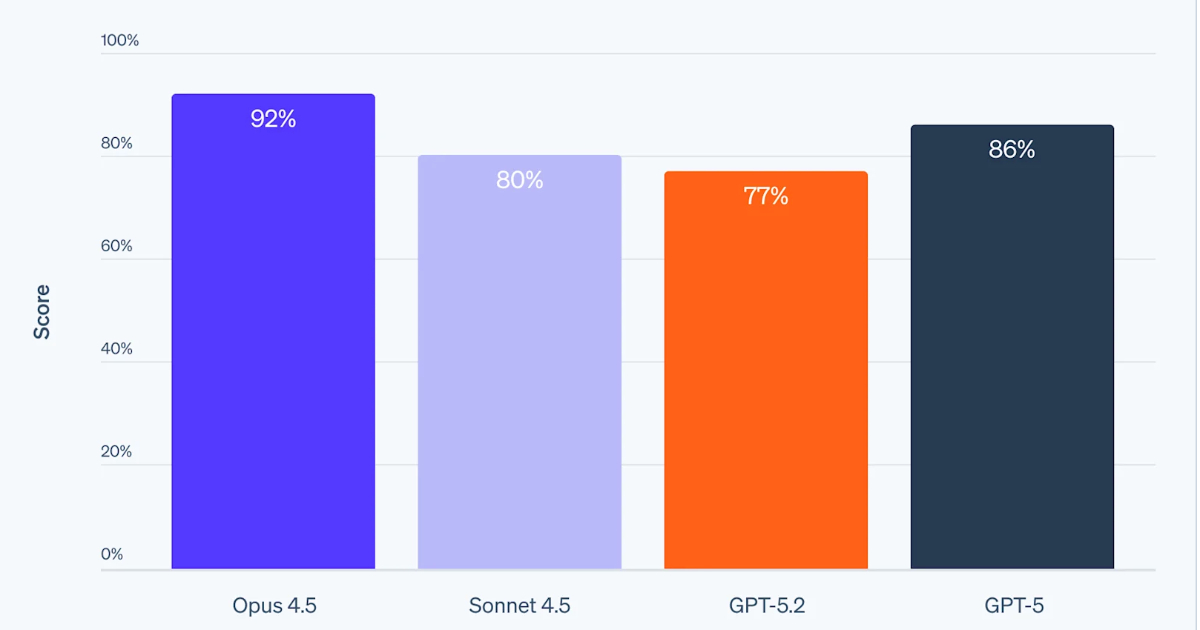
Stripe's recent benchmark revealing the struggles of AI agents with integration validation is a critical, albeit expected, development in the rapidly evolving landscape of agentic AI. The focus on real-world, production-like constraints—backend, frontend, and browser-based workflows—immediately elevates this beyond theoretical exercises. We've been seeing increasing attention on the reliability of AI outputs, as highlighted in "Most RAG Hallucinations Are Retrieval Failures: How the Retrieval Brick Decides What the Model Can Invent"[/post/most-rag-hallucinations-are-retrieval-failures-how-the-retri-cmrm15ip9031fqsky7d5xwu3v], where the root of many AI errors is traced back to flawed data retrieval. Stripe’s findings underscore a similar principle: even if an agent can *build* something, ensuring its correctness and stability under real-world conditions remains a significant hurdle. The ambition to unleash AI agents broadly across the internet, as Vint Cerf is pursuing “Vint Cerf is working on a plan to unleash AI agents on the open internet”, hinges on addressing these validation challenges.
The core takeaway isn't that AI agents *can't* build integrations—the benchmark demonstrates they can. Rather, it’s that current agentic systems exhibit a marked gap in their ability to rigorously test and validate their creations. This isn't simply about writing unit tests; it’s about simulating the complexities of a production environment, anticipating edge cases, and ensuring seamless performance across diverse user interactions. The validation problem is particularly acute within complex systems like Stripe’s, where integrations can have significant financial and security implications. The fact that Stripe, a company deeply invested in reliable infrastructure, is publishing this benchmark signals a broader recognition within the industry: the promise of AI-powered automation must be tempered by a commitment to robust verification. This also connects to the ongoing evaluation of large language models, where, as seen in a recent analysis of GLM 5.2 “GLM 5.2 is great ... but #AI #GLM #Claude #OpenAI #Anthropic”, even significant advancements don’t automatically guarantee consistent and trustworthy output.
This validation deficit highlights a potential shift in how we approach agentic AI development. The initial wave of enthusiasm focused heavily on the agent’s ability to *generate* code or configurations. The next phase requires a more disciplined focus on verification and validation frameworks. We need tools and methodologies that enable developers to systematically test, debug, and monitor the behavior of AI agents in production. This will likely involve incorporating techniques from traditional software engineering, such as property-based testing, formal verification, and anomaly detection. Moreover, it will necessitate a rethinking of the human-AI collaboration model, where human oversight and validation become an integral part of the agent’s workflow, rather than an afterthought. It's about moving beyond the "build it and they will come" mentality to a more iterative, validation-driven approach.
Looking ahead, the Stripe benchmark serves as a valuable data point for the AI research community and a clear call to action for developers building agentic systems. The challenge now is not just to create agents that can perform tasks but to create agents that can *prove* they are performing them correctly, consistently, and safely. How will the field evolve to prioritize validation alongside generation, and what new architectures or methodologies will emerge to bridge this critical gap? The answer to that question will largely determine whether the vision of seamless, AI-powered automation becomes a reality or remains a tantalizing, yet elusive, promise.
Stripe introduces a benchmark suite to evaluate whether AI agents can build real-world Stripe integrations across backend, frontend, and browser-based checkout workflows. The study examines end-to-end software engineering capability, focusing on execution, testing, and validation gaps in agentic systems under production-like constraints.
By Leela KumiliRead on the original site
Open the publisher's page for the full experience