How to Build Consistent Designs with Claude Code
Our take
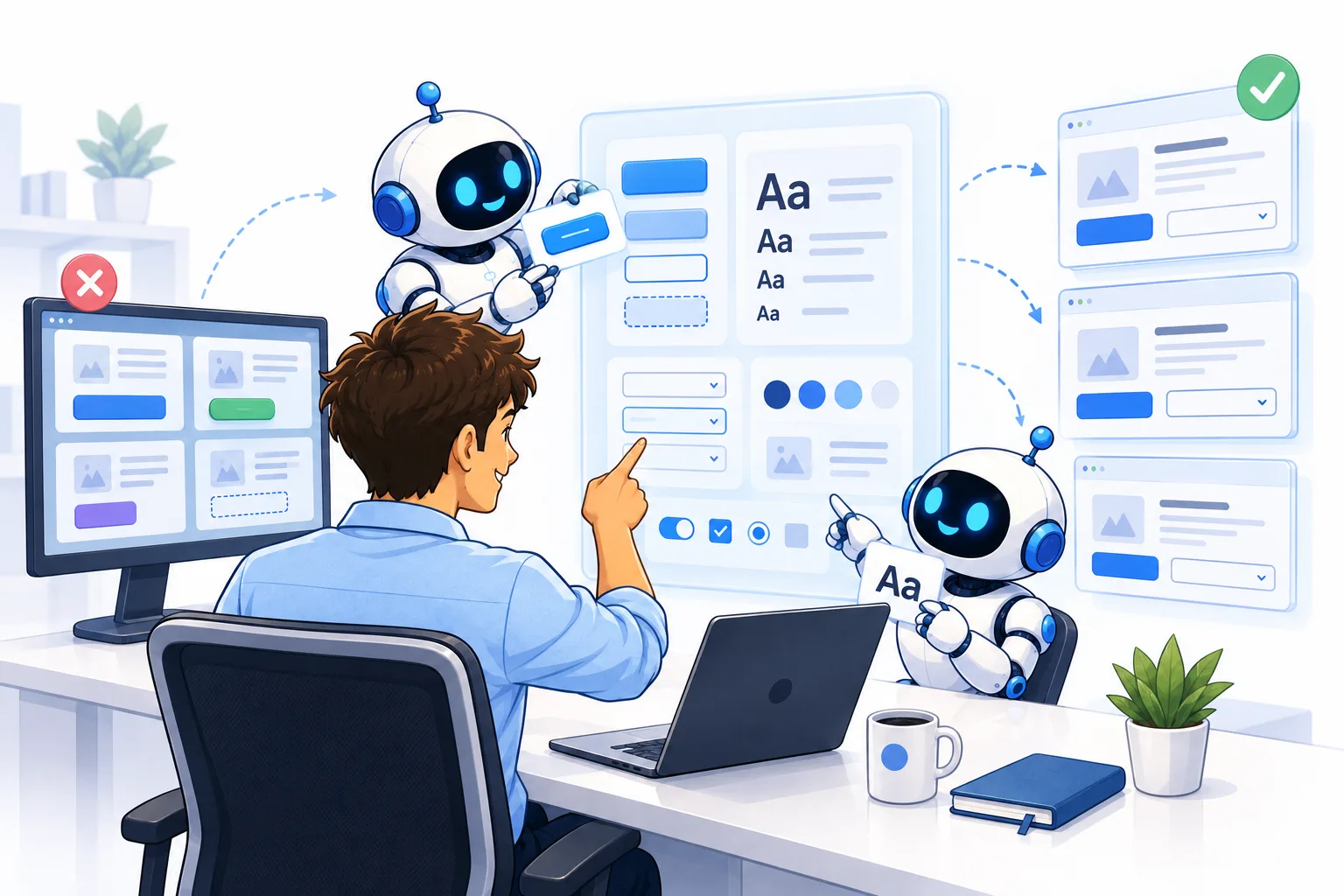
The rise of AI-powered design assistance tools like Claude Code, as explored in the recent Towards Data Science article, signals a significant shift in how we approach application development. For too long, maintaining visual consistency across projects has been a frustrating bottleneck, often requiring dedicated design teams and meticulous style guides. The ability to leverage AI to automate this process, ensuring uniform typography, color palettes, and component styling, represents a powerful step toward greater developer efficiency and a more polished user experience. We’ve seen similar breakthroughs in optimizing model training, such as the techniques detailed in Reparameterization Tricks: Variance Reduction by Smarter Gradients, where clever algorithmic adjustments dramatically improve performance. Just as those advancements unlocked new possibilities in machine learning, Claude Code’s capabilities promise to unlock a new level of design agility for software engineers. It’s not about replacing designers entirely, but rather about empowering developers to create more visually appealing and consistent applications, freeing up design resources to focus on higher-level strategic initiatives.
The beauty of Claude Code’s approach, as the article highlights, lies in its ability to learn from existing design systems. This is a crucial distinction from earlier attempts at automated design, which often resulted in generic, uninspired interfaces. By analyzing existing assets and patterns, Claude Code can generate designs that are not only consistent but also reflect the unique brand identity of an application. Consider the innovation we’re seeing in other AI-driven ventures, like the work of Exein, as detailed in New Italian unicorn Exein rides the physical AI wave. Their focus on harnessing AI for physical systems mirrors Claude Code’s application to the digital realm – both exemplify a growing trend of AI permeating traditionally human-led domains, augmenting rather than replacing human expertise. Furthermore, the rapid iteration and experimentation enabled by AI design tools could lead to entirely new design paradigms, moving beyond the constraints of traditional design workflows. The concept of instantly visualizing different pose options, as demonstrated by the app described in Former TikTok execs built an app that uses AI to teach you how to pose for a photo, demonstrates the power of AI to rapidly generate and evaluate design choices, a capability that could be extended to broader application interfaces.
The implications of this technology extend beyond individual developer productivity. Consistent design fosters user trust and brand recognition, contributing to a more cohesive and professional user experience. This, in turn, can lead to increased user engagement and adoption. Moreover, the democratization of design capabilities – making it easier for non-designers to create visually appealing interfaces – has the potential to accelerate innovation across a wide range of industries. We anticipate a future where design systems are dynamically generated and adapted by AI, constantly evolving to meet the changing needs of users and businesses. The shift will necessitate a re-evaluation of traditional design roles, emphasizing strategic thinking, user research, and creative direction rather than pixel-perfect execution. The focus will move toward curating and refining the output of AI-powered design tools, ensuring alignment with brand values and user experience principles.
Looking ahead, a key question to consider is how these AI design tools will integrate with existing development workflows and design collaboration platforms. Will they become seamlessly embedded within integrated development environments (IDEs), or will they operate as standalone services? The success of Claude Code, and similar tools, will ultimately depend on their ability to bridge the gap between design and development, fostering a more collaborative and efficient creative process. The potential is enormous, and we expect to see continued innovation in this space as AI continues to transform the way we build and interact with technology.
Keep your apps looking professional with Claude Code design skills
The post How to Build Consistent Designs with Claude Code appeared first on Towards Data Science.
Read on the original site
Open the publisher's page for the full experience