When to Use Claude Code and When to Use Codex
Our take
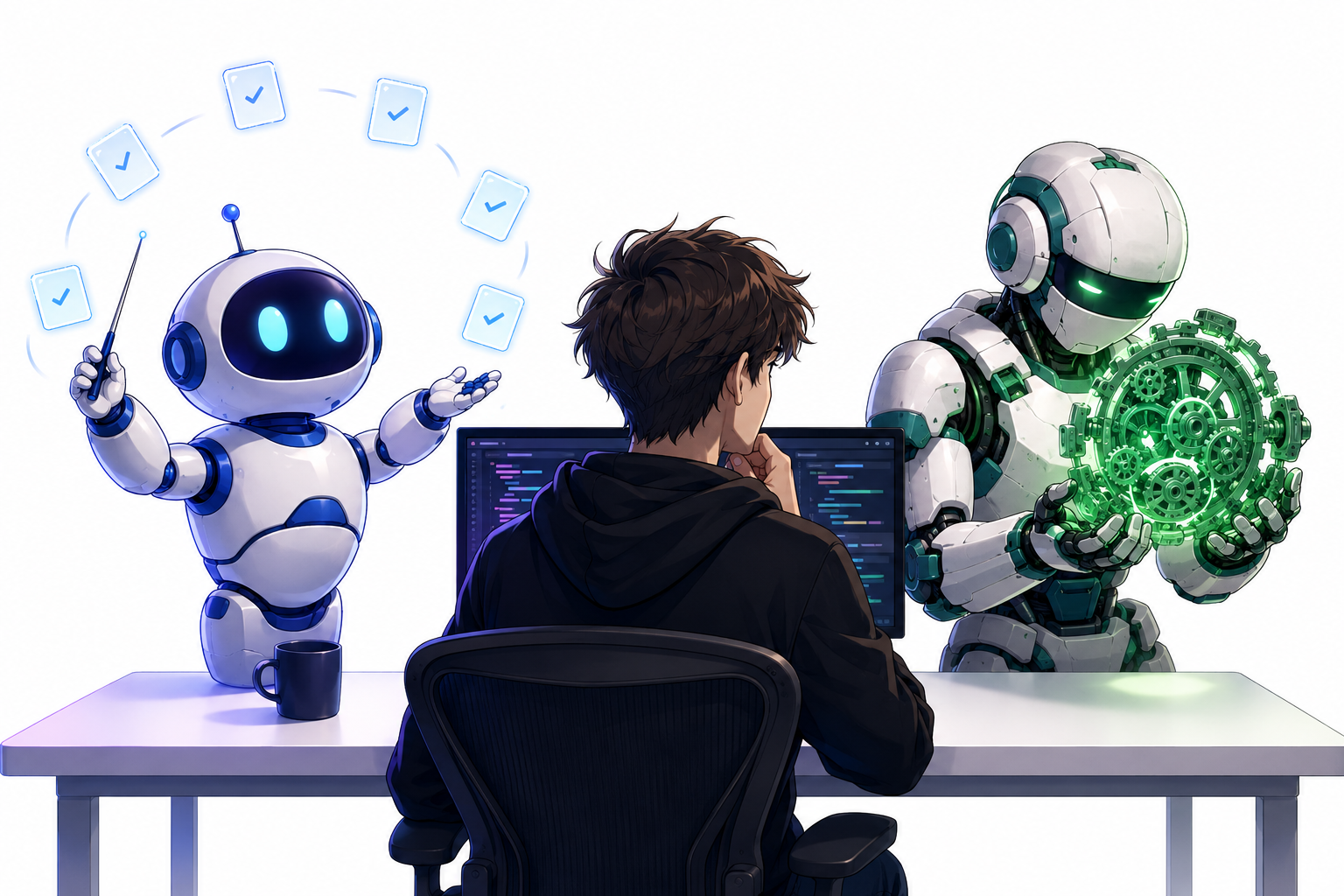
The recent article on Towards Data Science, "When to Use Claude Code and When to Use Codex," highlights a crucial nuance in the rapidly evolving landscape of AI-powered coding assistants. It’s not simply about *having* an AI coding tool; it's about understanding which tool is best suited for a specific task. This distinction is increasingly important as organizations grapple with integrating AI into their workflows and realizing the promised productivity gains. As we explored in “4 Claude Skills Every Data Scientist Needs in 2026,” the ability to leverage these advanced models effectively requires more than just basic prompting; it demands a thoughtful approach to selecting the right tool for the job and understanding its strengths and limitations. The article's breakdown of Claude Code’s strengths in complex reasoning and Codex’s proficiency in generating boilerplate code offers valuable practical guidance. The shift towards more specialized AI agents, rather than a one-size-fits-all solution, is a significant development that deserves close attention.
The core takeaway – that Claude Code excels in understanding and responding to nuanced instructions, particularly those involving complex logic and multi-step reasoning, while Codex remains a strong choice for quickly generating code snippets – underscores a broader trend in AI. We’re moving beyond general-purpose models towards specialized agents optimized for specific domains. This mirrors the broader trends discussed in “Nvidia’s AI advantage is moving beyond the GPU,” where the focus is shifting from sheer processing power to intelligent traffic control and optimized system design. Just as Nvidia is enhancing its offerings beyond the GPU, AI coding tools are evolving to become more finely tuned and task-specific. This specialization necessitates a new level of user understanding – a shift from simply asking an AI to "write code" to articulating the precise task and desired outcome in a way that leverages the agent's unique capabilities. It’s a move away from a purely generative approach and towards a collaborative partnership between human and AI.
The implications extend beyond individual developers. Organizations looking to implement AI-assisted coding need to consider the training and upskilling of their teams. It's no longer sufficient to simply provide developers with access to an AI coding tool; they need to understand the underlying capabilities and limitations of each agent to effectively integrate them into their workflows. This is particularly relevant given the discussions around efficient AI investment, as exemplified by ““We’re not doing 30 bets a year”: Vijay Pande on betting small after running $4 billion at a16z.” Focusing resources on understanding and deploying specialized tools like Claude Code and Codex, rather than chasing every emerging AI trend, is likely to yield a higher return on investment. The ability to strategically deploy these tools – knowing *when* to use which one – will be a key differentiator for organizations seeking to maximize their productivity and innovation.
Ultimately, the distinction between Claude Code and Codex represents a significant step towards a more nuanced and effective integration of AI into the software development lifecycle. It signals a move away from the hype surrounding “AI will replace developers” towards a more realistic vision of AI as a powerful collaborative tool. The key question moving forward is not just *what* AI coding tools will emerge, but *how* organizations will adapt their workflows, training programs, and overall development strategies to fully leverage the unique capabilities of these increasingly specialized agents. How will developers learn to best orchestrate these tools, leveraging their individual strengths to tackle increasingly complex coding challenges?
Learn where which coding agent is best
The post When to Use Claude Code and When to Use Codex appeared first on Towards Data Science.
Read on the original site
Open the publisher's page for the full experience