Beyond Market Intelligence

Acme AI is the next-generation, AI-powered spreadsheet platform built to replace Excel and redefine how analysts, data scientists, and enterprise teams work with data. Read more

Page 45

Could Your AI Systems Already Be High-Risk Under the EU AI Act?
KDnuggets

Could Your AI Systems Already Be High-Risk Under the EU AI Act?

Navigating the EU AI Act can feel complex, but understanding its implications is critical for responsible AI deployment. Could your current AI systems already be considered high-risk under the new regulations? Access our on-demand webinar to gain clarity on the latest guidance and define your next steps for AI governance. We'll explore practical strategies to ensure compliance and mitigate potential risks. For a deeper dive into building a robust AI foundation, see our article, "Many Companies Use AI.
🐈AI News & Strategy Daily | Nate B Jones
AI News & Strategy Daily | Nate B Jones

I Cut the Internet and Let AI Read the File I Could Never Upload. It Caught the Leak.

Facing data limitations? We recently encountered a scenario where a critical file proved impossible to upload traditionally. To overcome this, we utilized AI to process the data directly, revealing a previously undetected vulnerability. This innovative approach highlights the power of AI-native solutions to circumvent conventional constraints and unlock insights. Explore how this method can transform your data management, empowering you to discover crucial information even when standard tools fail. It’s a future-focused strategy for proactive problem-solving.
Kimi: Threat or menace?
TechCrunch

Kimi: Threat or menace?

This week’s release of Kimi, the new AI model from Moonshot AI, has sparked debate, with some raising concerns about a potential shift towards "full AI communism." While the term is provocative, the accelerated development warrants careful consideration. Kimi’s accessibility raises questions about responsible deployment and potential misuse. Understanding the implications of readily available AI models is crucial for navigating the future of data management. For a deeper dive into building robust AI infrastructure, explore our article, "Many Companies Use AI.
Waymo says San Francisco service has resumed after one-hour pause
TechCrunch

Waymo says San Francisco service has resumed after one-hour pause

Waymo has resumed its San Francisco autonomous ride-hailing service following a one-hour pause attributed to a power outage – a recurring challenge for the company. This interruption highlights the ongoing complexities of operating in urban environments and underscores the need for robust infrastructure. While Waymo continues to refine its technology, these incidents serve as a reminder of the real-world hurdles in achieving fully autonomous deployment. For a contrasting look at AI integration, explore our review of Vertu’s luxury AI agent.
Many Companies Use AI. Few Know How to Build an AI-Native Enterprise Data Platform.
Towards Data Science

Many Companies Use AI. Few Know How to Build an AI-Native Enterprise Data Platform.

Many companies are leveraging AI, yet few possess a practical architecture for an AI-native enterprise data platform. Building one demands more than isolated AI tools; it requires a cohesive system. Our latest article explores a robust architecture featuring data agents for streamlined integration, AI-powered quality assurance, and essential AI governance. Discover how to move beyond experimentation and establish a foundation for scalable, reliable AI initiatives. For related insights on structuring data for AI agents, see Pinecone’s introduction of Nexus Engine.
KDnuggets Weekly Roundup: Week of July 13, 2026
KDnuggets

KDnuggets Weekly Roundup: Week of July 13, 2026

This week’s KDnuggets Weekly Roundup delivers practical insights for data professionals. We're prioritizing efficiency, starting with a clear alternative to cumbersome if-else chains in Python – embrace the Registry Pattern. Level up your portfolio with five real-world SQL projects, stay current with ten top AI YouTube channels, and explore structured language model generation. For deeper exploration of related topics, consider "Pinecone Introduces Nexus Engine," now generally available, for compiling business context into structured data for AI agents.
Loop Engineering with Adaptive PDF Parsing: Start Cheap, Pay for a Heavier Parser Only When the Page Needs It
Towards Data Science

Loop Engineering with Adaptive PDF Parsing: Start Cheap, Pay for a Heavier Parser Only When the Page Needs It

Loop Engineering’s adaptive PDF parsing offers a transformative approach to document intelligence. Start with a cost-effective parser and only escalate to heavier processing when a page demands it—ensuring you pay only for what you need. This innovative system incorporates an escalation cascade and deterministic checks, proactively flagging parse failures *before* incurring deeper processing costs. Discover how this model delivers efficiency and predictability for enterprise document workflows, as explored in detail in our Enterprise Document Intelligence series.
Pinecone Introduces Nexus Engine for Compiling Business Context into Structured Data for AI Agents
InfoQ

Pinecone Introduces Nexus Engine for Compiling Business Context into Structured Data for AI Agents

Pinecone Nexus is now generally available, offering a transformative solution for AI agent development. This “knowledge engine” compiles your enterprise data into a structured layer, empowering agents to query business context directly. Teams can now ingest and curate this vital information once, ensuring reusability across agents, reducing token costs, and improving accuracy. Nexus streamlines workflows and unlocks greater AI efficiency. For those interested in the broader research landscape driving these innovations, explore “AI/ML Research - What Does it Really Take?” on our site.
All the EVs that were discontinued or killed off in the U.S. this year
TechCrunch

All the EVs that were discontinued or killed off in the U.S. this year

This year has seen a notable shift in the EV landscape, with several models exiting the U.S. market. The Honda Prologue is the latest to be discontinued, joining a growing list that signals evolving consumer demand and manufacturer strategies. While the transition to electric vehicles continues, these departures highlight the dynamic nature of the automotive industry. For deeper insights into automotive innovation, explore our recent article on Sheryl Sandberg’s investment in an AI-powered vehicle inspection service.
Federal employees can download TikTok on their work phones again
TechCrunch

Federal employees can download TikTok on their work phones again

Following a recent policy shift, federal employees are once again permitted to download TikTok on their government-issued devices. The Department of Justice has lifted the previous restrictions, signaling a reassessment of security concerns. This decision reflects an evolving understanding of risk mitigation within the digital landscape. For a broader perspective on the impact of AI on technology adoption, explore our article, "AI-driven memory crunch jolts India’s smartphone market," which examines how AI is reshaping consumer electronics.
How to Improve Customer Retention in FinTech
Towards Data Science

How to Improve Customer Retention in FinTech

Customer retention is a critical challenge in FinTech, demanding more than reactive measures. This practical guide explores a powerful combination: pre-churn scoring and uplift modeling. Discover how these techniques enable smarter, more targeted retention efforts, maximizing impact while optimizing resource allocation. By precisely identifying customers most likely to churn *and* those most responsive to intervention, you can transform your retention strategy. For a deeper dive into building an AI-native enterprise data platform to support these initiatives, see "Many Companies Use AI."
A 600-mile road trip (and data) proves EV charging doesn’t suck anymore
TechCrunch

A 600-mile road trip (and data) proves EV charging doesn’t suck anymore

A recent 600-mile road trip in an electric vehicle definitively demonstrates a significant shift: EV charging has improved dramatically. DC Fast Charging stations across the U.S. are now notably faster and more reliable than previously experienced, alleviating a common concern for potential EV buyers. This journey underscores the progress in infrastructure and technology, empowering a more seamless electric driving experience. For a broader perspective on the evolving EV landscape, explore our article detailing the EVs discontinued in the U.S. this year.
🐈Machine Learning
Machine Learning

The qlora 2e-4 default is wrong under 10k samples and nobody talks about it [D]

Fine-tuning QLoRA models on smaller datasets—less than 10,000 samples—often leads to unexpected results. The pervasive default learning rate of 2e-4, widely promoted across tutorials and documentation, can actually trigger overfitting. Extensive experimentation reveals that a starting learning rate of 1e-4 or lower, combined with increased epochs, consistently yields significantly improved evaluation metrics. This adjustment, easily implemented, can save practitioners considerable time and frustration, as detailed in a recent discussion about ECCV expenses.
🐈Machine Learning
Machine Learning

NeurIPS reviews coming in soon! [D]

NeurIPS reviews are anticipated to appear around July 22nd at 5:30 PM AoE, based on observations across social platforms. For those who submitted to NeurIPS 2026 – whether to workshops or the main/other tracks – we'd welcome your perspectives on the upcoming reviews. This period marks a critical juncture for researchers. Explore insights into model performance; for example, our recent article on "Schema," a harness achieving 99% on ARC-3, offers a relevant case study in pushing boundaries. Share your thoughts and prepare for the assessments!
Prism accidentally leaked [D]
Machine Learning

Prism accidentally leaked [D]

A recent, swiftly addressed incident at Prism highlights a critical concern in the AI research space. A data leak inadvertently resulted in the compilation and distribution of another researcher's paper, a situation quickly acknowledged and rectified by Prism's team, who took their website offline within ten minutes of initial reports. While their responsiveness is commendable, the incident raises valid questions about data security and the potential for unintentional intellectual property breaches.
🐈Machine Learning
Machine Learning

Best current tools for Multi-Objective Surrogate-Based Optimization (MOSBO) on heterogeneous study data meta-analysis?[P]

Navigating Multi-Objective Surrogate-Based Optimization (MOSBO) on heterogeneous study data demands a robust workflow. For your project involving ~40 studies and continuous response surfaces, the strongest 2026 stack likely converges on PyMC for hierarchical modeling, coupled with pymoo and pysamoo for surrogate-assisted optimization. SMT provides solid surrogate options, while Matlab's Global Optimization Toolbox offers an alternative. Colab-friendly Python experience simplifies implementation. Explore resources like tutorials and applied examples to accelerate your progress—similar to the focused loop engineering discussed in "Context Engineering Isn’t Enough."
🐈Machine Learning
Machine Learning

New Fable5/Opus4.8 harness called "Schema" claims 99% on ARC-3 [R]

Introducing Schema, a new Fable5/Opus4.8 harness achieving impressive results on the ARC-AGI-3 benchmark. Schema attains 99% accuracy with Claude Opus 4.8 and 95.35% with GPT-5.6 Sol—all without modifying model weights. This innovative harness refines the interaction process, optimizing how observations inform models, predictions are tested, and plans are executed. A fixed fallback rule prioritizes Opus 4.8 and Sol, ensuring robust performance across all games, as noted by ARC Prize. Explore the technical details and methodology at [https://schema-harness.github.io/](https
Seeking collaborators for scaling and independent evaluation of a new recurrent language model architecture (preprint + code) [R]
Machine Learning

Seeking collaborators for scaling and independent evaluation of a new recurrent language model architecture (preprint + code) [R]

Researchers have introduced DABSN (Dynamic Adaptive Bias State Network), a novel recurrent language model architecture demonstrating promising results in reasoning, memory, and long-sequence tasks. The initial preprint and accompanying code—available in PyTorch, C++, and Triton—detail the architecture’s behavior and performance across benchmarks like MQAR and A5/60. Early language modeling experiments with a 24M parameter model have yielded unexpectedly strong results, prompting a second paper focused on scaling and long-context behavior. Collaboration is sought for independent reproduction, evaluation design, and access to larger GPU resources.
🐈Machine Learning
Machine Learning

AI/ML Research - What Does it Really Take? [D]

Embarking on a career in AI/ML research demands dedication and a clear vision. This exploration delves into the realities of pursuing that path, particularly at the intersection of audio and artificial intelligence. Driven by a passion for combining audio engineering expertise with advanced AI techniques, the author details their journey—from coding bootcamps to master's studies—and the challenges encountered. See related coverage on recent advancements, such as the "New Fable5/Opus4.8 harness called "Schema" claims 99% on ARC-3," for further insights into current trends.
Version Controlled SQL Database Dolt Releases 2.0 with Automatic Storage Cleanup and Compression
InfoQ

Version Controlled SQL Database Dolt Releases 2.0 with Automatic Storage Cleanup and Compression

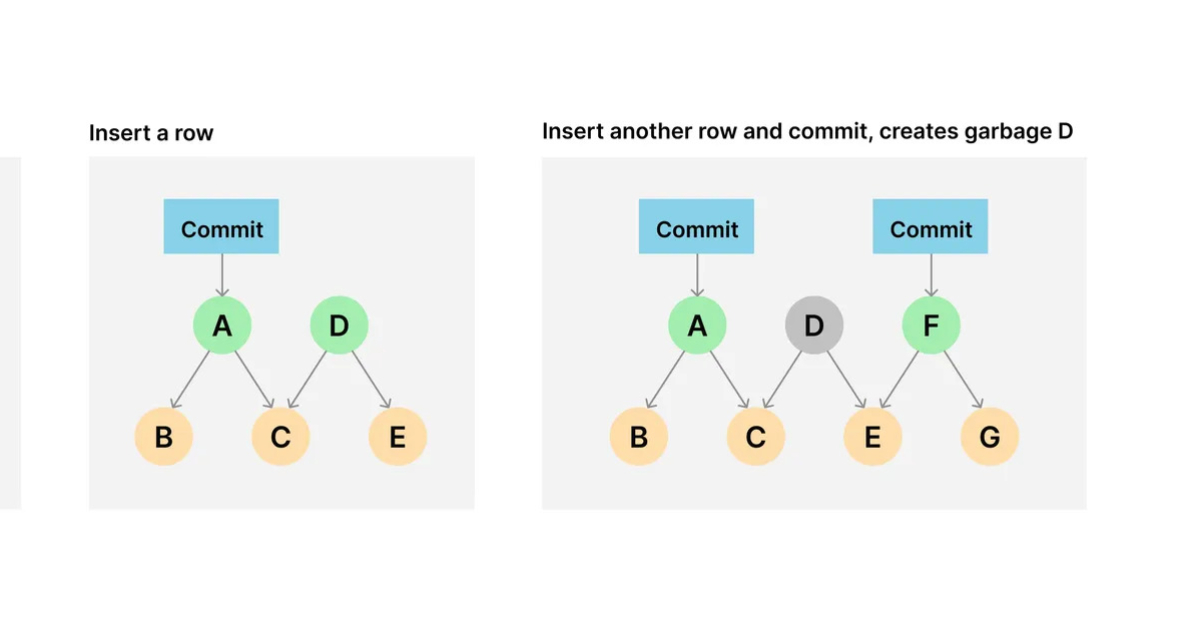
DoltHub’s release of Dolt 2.0 marks a significant advancement in version-controlled SQL databases. This major update prioritizes efficient data management with automatic storage cleanup, including garbage collection and compression—critical for maintaining performance. Dolt 2.0 also delivers enhanced support for large datasets and vector data types, empowering users to explore more complex analytical workflows. Discover how this open-source database streamlines your data journey and optimizes resource utilization with these key improvements.
🐈Machine Learning
Machine Learning

Mechanistic interpretability: a first paper on disentangling a convolutional neuron [R]

Recent independent research offers a novel approach to mechanistic interpretability, focusing on detailed analysis of individual neurons. This initial paper explores a 1x1 convolution within InceptionV1, revealing that the Hadamard product of a neuron’s receptive field and weight defines the patterns it detects. Through clustering these products, the study identifies monosemantic activations—cars, cats, dogs—and surprisingly, lesser-known activations like letters and faces. This technique illuminates a deliberate pattern within gradient descent, suggesting a nuanced organization of concepts. [https://pages.narang99.in/posts/2026-07-12-disentangling-mixed4
🐈Machine Learning
Machine Learning

short-paper at ACL/EMNLP/EACL [R]

Navigating the short-paper submission process for ACL/EMNLP/EACL can be challenging. Acceptance rates for these concise submissions often lag behind those of full-length papers, and understanding the landscape is key. We're seeking insights from anyone who has successfully had a short-paper accepted to these prestigious conferences in 2025 or 2026. Sharing your track and overall assessment would be invaluable. Recent developments, like those detailed in "Prism accidentally leaked," highlight the complexities of the AI research pipeline.
🐈Machine Learning
Machine Learning

Does anyone else miss the old conference ecosystem? [D]

The research community is reflecting on a shift in the conference landscape. Many recall a time when established events like BMVC, ACCV, FG, ICIP, and ICASSP fostered vibrant, specialized communities—FG for face analysis, ICASSP for signal processing, and the others for consistently strong papers. Now, with submission numbers surging and review processes strained, concerns arise about potentially overlooked research.
PnP-CoSMo: A Multi-Contrast MRI Reconstruction Framework based on Content/Style Modeling [R]
Machine Learning

PnP-CoSMo: A Multi-Contrast MRI Reconstruction Framework based on Content/Style Modeling [R]

Unlock a new era of multi-contrast MRI reconstruction with PnP-CoSMo. This innovative framework, detailed in our *Medical Image Analysis* publication, identifies the shared structural essence – the "content" – underlying different MRI contrast spaces. PnP-CoSMo achieves state-of-the-art performance without requiring raw k-space training data, a significant advancement in machine learning-based MRI. Its design ensures generalizability across various contrasts and offers a built-in explanatory framework. Explore the details and code at [https://cnmyro.substack.com/p/pnp-cosmo-a-plug-and-play-method](https
🐈Machine Learning
Machine Learning

Looking for JEPA devil advocates [R]

The emergence of JEPA-like world models presents a compelling, future-focused direction for robot learning, as highlighted by recent research. While Yann LeCun’s vision is undeniably ambitious, a critical evaluation is warranted. We're seeking perspectives that challenge the current trajectory – "devil's advocates" who can identify potential downsides compared to alternative world model approaches. Are there overlooked limitations or vulnerabilities within JEPA’s framework? Explore this discussion, and consider “Are Current AI Memory Architectures Optimizing for the Wrong Abstraction?” for a deeper dive into related challenges.
🐈Machine Learning
Machine Learning

Stereo2Spatial: Convert Stereo Music Tracks to Spatialized Binaural Mixes [P]

Introducing Stereo2Spatial, a novel AI model transforming stereo music tracks into immersive, spatialized binaural mixes. Developed over six months, this project addresses the scarcity of high-quality spatial audio by leveraging flow-matching diffusion techniques. Initially explored in latent space, a subsequent pivot to raw waveform modeling, incorporating amplitude lifting, resolved critical quality bottlenecks. Trained on 7,669 tracks, Stereo2Spatial offers optional mix-style conditioning and is released under Apache 2.0.
🐈Machine Learning
Machine Learning

whats the best and complete way to keep up with ai/ml news? [D]

Staying current in the rapidly evolving AI/ML landscape can feel overwhelming, especially when a single newsletter isn't enough. To ensure you're not left behind, prioritize a multi-faceted approach. Begin with curated aggregators and industry publications, then supplement with focused Twitter/X lists of leading researchers and practitioners. Finally, actively participate in relevant online communities. For deeper insights into related trends, explore our recent article, "Neil Rimer thinks the AI money is coming back out," which offers a valuable perspective on market dynamics.
🐈Machine Learning
Machine Learning

EU AI Act OpenRAG: 933 legally structured chunks and BGE-M3 embeddings in one SQLite file [P]

Introducing EU AI Act OpenRAG, a meticulously structured resource for legal-NLP experimentation. This downloadable corpus, based on Regulation (EU) 2024/1689, comprises 933 legally-aligned chunks—organized by article paragraph, recital, and definition—within a single SQLite file. Utilizing BGE-M3 embeddings, it delivers a normalized 1024-dimensional vector for each chunk, alongside EUR-Lex links and application-date metadata. Initial evaluations demonstrate improved recall and QA performance compared to baselines, showcasing the value of structural chunking. Explore the dataset at huggingface.co/datasets/faitholopade
🐈Machine Learning
Machine Learning

Are Current AI Memory Architectures Optimizing for the Wrong Abstraction? [D]

Are current AI memory architectures truly optimized for the future of human-AI collaboration? A recent exploration questions whether AI's persistent context—typically stored as facts and preferences—should evolve beyond simple recall. Imagine systems inferring higher-level patterns in user reasoning, like preferred explanatory frameworks, instead of just remembering interests. This shift could transform persistent context into an evolving model of user understanding. Could such sophisticated representations emerge organically, or do they demand fundamentally new architectures?
🐈Machine Learning
Machine Learning

Why is ECCV so insanely expensive for students presenting papers? [D]

The cost of attending ECCV as a student presenting a paper is a significant barrier, with full registration reaching $805 USD even for those with accepted submissions. This structure effectively penalizes researchers for their academic achievements, especially given the competitive nature of travel grants and registration waivers. Many students find themselves excluded due to these prohibitive fees. For context, similar concerns regarding accessibility are surfacing in other academic spaces, as highlighted in our recent article on "TACL journal doubts.
🐈Machine Learning
Machine Learning

PyTorch model running 170x slower on T4 vs A100. What could cause a bottleneck this extreme? [D]

A recent report highlights a stark performance disparity: a PyTorch model experienced a 170x slowdown when running on an NVIDIA T4 versus an A100 GPU. This extreme bottleneck, observed with a point-tracking model processing 47 frames at 256x256 resolution, suggests factors beyond typical generational hardware differences. With 99% GPU utilization and pure FP32 precision, potential causes include inefficient 4D correlation volume calculations or transformer layer performance. Further profiling is recommended to pinpoint the specific bottleneck.
🐈Machine Learning
Machine Learning

Tried testing qwen 35b moe model on s26 ultra , without compromising on precision [R] ,[D]

Early testing reveals promising results for running a private Qwen 35B MoE LLM on an S26 Ultra, demonstrating a potential for approximately 90 tokens/second input processing and 8 tokens/second output generation after optimization. This achievement, realized through self-directed AI/ML exploration and leveraging available compute resources, highlights the accessibility of advanced model deployment. The author, without disclosing implementation details, is actively seeking collaborators to further test and refine this mobile runtime.
🐈Machine Learning
Machine Learning

BMVC rebuttals update [D]

**BMVC Rebuttal Update [D]: Important Clarification** Reviewer access to rebuttals opened on July 11th at 19:05 UTC. Consequently, any subsequent modification to a rebuttal, even if currently hidden, triggers an immediate update to the reviewer's final score. We encourage authors to carefully monitor review timelines; observing a "modified" timestamp after July 11th indicates a score adjustment has occurred. Please assess how many of your reviews reflect this modification to understand potential score impacts.
🐈Machine Learning
Machine Learning

TACL journal doubts [D]

Navigating the TACL review process can understandably generate questions. Submitting around June 1st for the July cycle suggests reviews may arrive within the subsequent weeks, though timelines can vary. Historically, the full TACL publication process takes several months. TACL holds considerable respect within the NLP community, viewed as a strong venue for impactful research. Its reputation reflects a rigorous review process and high publication standards. For those exploring related avenues, consider reviewing discussions around short-paper submissions at ACL/EMNLP/EACL, as detailed in a recent article.
🐈Machine Learning
Machine Learning

CfP | RTCA @ NeurIPS 2026 [R]

The inaugural Real-Time Conversational Agents (RTCA) Workshop at NeurIPS 2026, December 11 or 12 in Sydney, Australia, invites submissions exploring the complexities of natural, multimodal interaction. Addressing challenges like latency and cross-modal alignment, RTCA seeks original research across speech, vision, language, and HCI. We welcome full papers, short papers, and demos—all submissions must adhere to the NeurIPS 2026 style file. Interested in related developments? See "Intuit scrapped its own AI agent architecture twice in four months" for further insights. Visit rtcaneurips26.github.io/ for details
🐈Machine Learning
Machine Learning

ExTernD: Expanded-Rank Ternary Decomposition Ternary LLM PTQ with Accuracy Approaching Any Quantization Level [P]

ExTernD introduces a novel approach to Post-Training Quantization (PTQ) for Large Language Models, resolving a critical limitation of traditional ternary quantization. Unlike fixed-size methods that plateau in accuracy, ExTernD decomposes matrices into ternary components alongside a scalable diagonal scaling matrix. This innovative architecture allows for arbitrarily fine-grained accuracy control with a minimal increase in VRAM—often comparable to existing quantization techniques. Explore the full details of this transformative method in the arXiv paper: [https://arxiv.org/pdf/2607.13511](https://arxiv.org/pdf/2607.13511).
🐈AI News & Strategy Daily | Nate B Jones
AI News & Strategy Daily | Nate B Jones

Applying for jobs stopped working. Here's the fix ⬇️ #ATS #careeradvice #jobmarket #AI

Navigating today’s job market requires a fresh approach. Many job seekers are encountering a frustrating reality: applications simply aren't yielding results. The culprit? Increasingly sophisticated Applicant Tracking Systems (ATS) powered by AI. Here’s a concise guide to understanding why your applications might be stalling and, more importantly, how to fix it. Discover actionable strategies to optimize your resume and application process, ensuring your qualifications reach the right eyes. #ATS #careeradvice #jobmarket #AI
Neil Rimer thinks the AI money is coming back out
TechCrunch

Neil Rimer thinks the AI money is coming back out

Venture capitalist Neil Rimer, co-founder of Index Ventures, observes a significant shift in the AI landscape: the substantial wealth generated in Silicon Valley is poised for redistribution. Rimer anticipates this will occur, either through voluntary measures or ultimately, through broader economic forces. This trend signals a maturing AI ecosystem, moving beyond initial investment booms. For deeper context on the evolving funding dynamics influencing this shift, explore our recent article detailing the complex funding round underway at nuclear startup Valar Atomics.
Vertu wants executives to pay $6,880 for an AI agent — here’s how it actually performs
TechCrunch

Vertu wants executives to pay $6,880 for an AI agent — here’s how it actually performs

Vertu’s latest offering is a bold move: a $6,880 AI agent integrated into a luxury foldable phone. But does the reality live up to the price tag? Our in-depth review explores the practicalities of daily use, assessing AI workflow capabilities, battery performance, and security features. We rigorously tested Vertu’s promises, providing a clear picture of what to expect. For those seeking safer phone options for children, consider the innovative approaches detailed in our article, "Parents want safer phones for kids.
Agility Robotics plants its flag in Tesla’s backyard
TechCrunch

Agility Robotics plants its flag in Tesla’s backyard

Agility Robotics is strategically expanding its presence, establishing a new training center for its Digit robots in Fremont, California—directly within Tesla’s operational sphere. This move signifies a clear commitment to advancing the practical application of AI-powered robotics in logistics and automation. The center will empower partners and customers to explore Digit's capabilities firsthand, accelerating the adoption of innovative solutions for real-world challenges. Agility’s investment underscores a future-focused approach to robotics deployment and workforce augmentation.
Capital One releases VulnHunter, an open-source AI tool that finds software flaws before hackers do
VentureBeat

Capital One releases VulnHunter, an open-source AI tool that finds software flaws before hackers do

Capital One has released VulnHunter, an open-source AI security tool designed to proactively identify and remediate software vulnerabilities before they can be exploited. Built internally and now available on GitHub, VulnHunter employs an "attacker-first forward analysis" and a built-in falsification engine to pinpoint exploitable code paths and suggest fixes—a departure from traditional vulnerability scanners. This move represents a significant evolution for Capital One, demonstrating a commitment to open-source collaboration as a cornerstone of its cybersecurity strategy.
Agents think in milliseconds, legacy infrastructure doesn't. LinkedIn, Walmart and Zendesk shared how they closed the gap at VB Transform 2026
VentureBeat

Agents think in milliseconds, legacy infrastructure doesn't. LinkedIn, Walmart and Zendesk shared how they closed the gap at VB Transform 2026

Agents operate at lightning speed, but legacy infrastructure often lags behind. A key takeaway from VB Transform 2026 was clear: the real bottleneck in AI agent deployment isn't the models themselves, but rather the underlying infrastructure. LinkedIn, Walmart, and Zendesk shared their experiences navigating this challenge, highlighting the need for a shift from human-centric systems to those optimized for agentic workflows. Discover how these leaders are building for model and context independence to unlock greater productivity and innovation.
Apple and Google ordered to purge ‘nudify’ apps from App Stores
TechCrunch

Apple and Google ordered to purge ‘nudify’ apps from App Stores

Following legal action by San Francisco City Attorney David Chiu, both Apple and Google have been ordered to remove apps utilizing “nudify” filters from their respective App Stores. These filters, which alter images to sexualize individuals, violate California state law. The city attorney’s office asserts that Apple and Google were previously informed of these violations. This decisive action underscores a growing commitment to user safety and responsible app distribution within the digital marketplace.
Nuclear startup Valar Atomics in talks to raise new funding at $6B valuation
TechCrunch

Nuclear startup Valar Atomics in talks to raise new funding at $6B valuation

Valar Atomics, a nuclear fission startup, is reportedly in discussions to secure new funding at a substantial $6 billion valuation, signaling a continued shift towards intricate, multi-stage investment rounds. This approach often obscures initial entry prices, reflecting a complex landscape for emerging companies. The potential funding underscores growing investor interest in advanced nuclear technologies. For founders navigating similar challenges, consider the strategies discussed in "No product? No problem. This Disrupt 2026 session…" for securing early-stage capital.
Intuit scrapped its own AI agent architecture twice in four months. At VB Transform 2026, its AI VP called that the fast path
VentureBeat

Intuit scrapped its own AI agent architecture twice in four months. At VB Transform 2026, its AI VP called that the fast path

Intuit’s journey with agentic AI highlights a crucial truth: rapid iteration is essential. The company initially built a fleet of specialist agents, then pivoted to an orchestration layer, only to rebuild the entire architecture within 60 days after encountering limitations in context retention. This experience, shared at VB Transform 2026, underscores the challenges of scaling agent-based systems and the importance of prioritizing customer outcomes. As Brex demonstrated, observing agent behavior can be a powerful tool in policy creation.
Databricks hits $188B valuation, extending its run as AI’s favorite second act
TechCrunch

Databricks hits $188B valuation, extending its run as AI’s favorite second act

Databricks has solidified its position as a leader in the evolving AI landscape, recently achieving a valuation of $188 billion. The company’s strategic pivot towards AI-native solutions, particularly its focus on open-weight AI models for coding, demonstrates a future-focused approach. Databricks’ published research highlights significant cost savings for users, empowering organizations to leverage AI effectively. This transformation underscores Databricks' commitment to accessible and transformative data management for the next generation.
AI-driven memory crunch jolts India’s smartphone market
TechCrunch

AI-driven memory crunch jolts India’s smartphone market

India’s smartphone market is experiencing a notable slowdown, a direct consequence of the surging demand for AI-powered devices. This "memory crunch" is reshaping the consumer electronics landscape, impacting pricing, demand, and corporate strategy. The shift underscores how the AI boom is fundamentally altering established market dynamics. To understand the broader implications of this trend, explore our analysis on "Cloud Native Infrastructure Emerges as the Foundation for Trustworthy Agentic AI," which details the technological underpinnings driving this evolution.
The Zoom hack that says, ‘Don’t record me’
TechCrunch

The Zoom hack that says, ‘Don’t record me’

The proliferation of meeting recording and AI transcription raises a critical question: are we sacrificing genuine engagement for automated summaries? The recent Zoom hack, displaying a “Don’t record me” prompt, highlights a growing discomfort with constant surveillance. As every interaction – from formal presentations to casual chats – gets digitized, the value of original thought and spontaneous discussion diminishes. It’s time to consider whether the convenience of automated insights outweighs the cost of a less authentic, more mediated communication landscape.
Applications close in 48 hours — here’s everything Australian founders need to know about Stripe x Startup Battlefield
TechCrunch

Applications close in 48 hours — here’s everything Australian founders need to know about Stripe x Startup Battlefield

Applications for Stripe x Startup Battlefield close in just 48 hours. Eight Australian startups will pitch on August 19th at Stripe Tour Sydney, competing for automatic entry into TechCrunch Disrupt in San Francisco – a guaranteed spot on a global stage. This is a pivotal opportunity for founders seeking accelerated growth and visibility. For those still refining their pitch, consider insights from our article, "No product? No problem," which explores securing pre-seed funding through compelling storytelling. Don’t miss your chance to elevate your startup’s profile.
How Apple’s big lawsuit could disrupt OpenAI’s IPO plans
TechCrunch

How Apple’s big lawsuit could disrupt OpenAI’s IPO plans

Apple’s recent trade secrets lawsuit against OpenAI presents a significant challenge to the company's anticipated IPO. Filed last Friday, the complaint alleges a concerning pattern of misconduct, implicating senior leadership and highlighting a substantial influx of former Apple employees—over 400—now working at OpenAI. With OpenAI’s response measured and the IPO timeline looming, this legal action introduces considerable uncertainty. For further context on the evolving AI landscape, explore our article detailing the release of Moonshot AI’s Kimi K3 model.