5 Must-Read Resources for Mastering Small Language Models
Our take
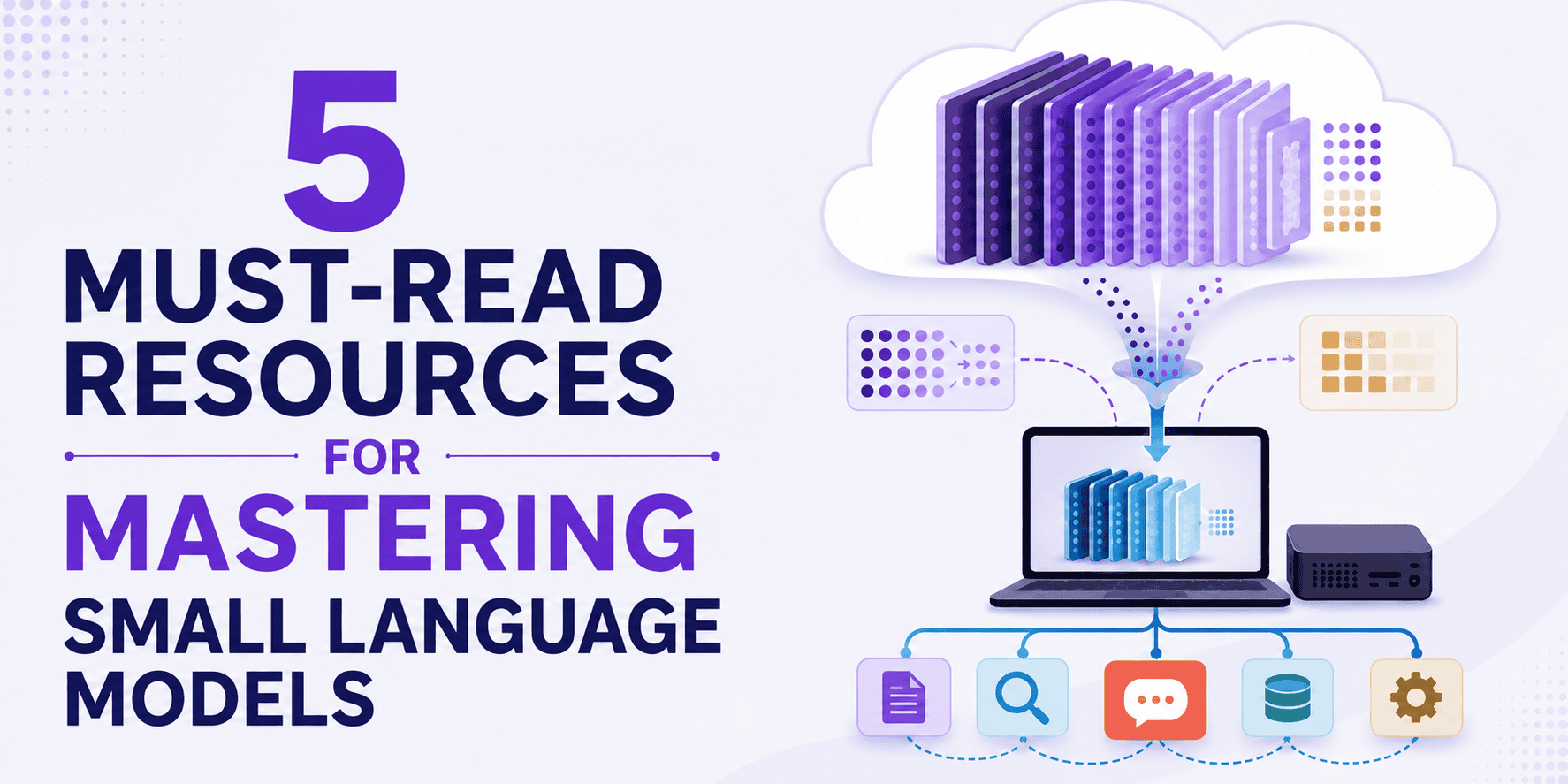
The burgeoning field of Small Language Models (SLMs) is rapidly moving beyond academic curiosity and into practical application for data professionals. The recent roundup of five must-read resources highlights a critical shift: the recognition that massive, resource-intensive LLMs aren't always the optimal solution. As we've explored in Securing MCP in Production: Defense-in-Depth Beyond the Gateway, security and control are paramount in deploying AI models, and SLMs offer a compelling avenue for achieving greater governance by enabling local deployment and fine-tuning. This move towards smaller, more manageable models reflects a growing understanding of the need for specialized AI solutions tailored to specific tasks and data sets, rather than relying on general-purpose behemoths. The accessibility offered by SLMs empowers organizations to experiment and innovate without the prohibitive costs and complexities associated with larger models.
The resources covered—architecture, fine-tuning, agentic workflows, and local deployment—represent key areas where data professionals can unlock significant value. Fine-tuning, in particular, is crucial for adapting SLMs to specific business needs, transforming them from generic tools into highly effective, domain-specific assistants. The exploration of agentic workflows—allowing SLMs to autonomously perform tasks—is another exciting development, mirroring the trends we’ve discussed in Cyera agrees to acquire Oasis Security for $1B to safeguard proliferating AI agents. As AI agents become increasingly prevalent, the ability to securely and effectively manage and deploy them, even at a smaller scale, becomes a critical differentiator. A shift away from traditional evaluation methods, as outlined in Presentation: Getting Rid of LeetCode Interviews in the World of AI, further underscores the need for a practical, outcome-driven approach to assessing AI talent, which directly benefits from the increased accessibility of SLMs for hands-on experimentation.
What makes this trend particularly significant is the democratization of AI capabilities. Previously, the barrier to entry for leveraging advanced language models was high, requiring significant computational resources and specialized expertise. SLMs lower this barrier, enabling a wider range of organizations—and even individual data professionals—to participate in the AI revolution. This isn't about replacing large language models entirely; rather, it’s about expanding the ecosystem and offering a spectrum of solutions that cater to diverse needs and resource constraints. We’re entering an era where the right tool for the job isn't always the biggest, but the most adaptable and efficiently deployed. The ability to run models locally—as highlighted within the resources—also addresses growing concerns around data privacy and security, providing greater control over sensitive information.
Looking ahead, the convergence of SLMs with edge computing and specialized hardware promises even greater performance and efficiency gains. The ability to embed AI capabilities directly into devices and workflows, without relying on cloud connectivity, will unlock new possibilities across a range of industries, from healthcare to manufacturing. As the ecosystem matures, we can anticipate a proliferation of open-source tools and frameworks that further simplify the development and deployment of SLMs. The core question becomes: how will organizations effectively integrate these increasingly specialized models into their existing data infrastructure and workflows to maximize their impact on productivity and innovation?
Read on the original site
Open the publisher's page for the full experience