How to Leverage Local Small Language Models for Your Projects
Our take
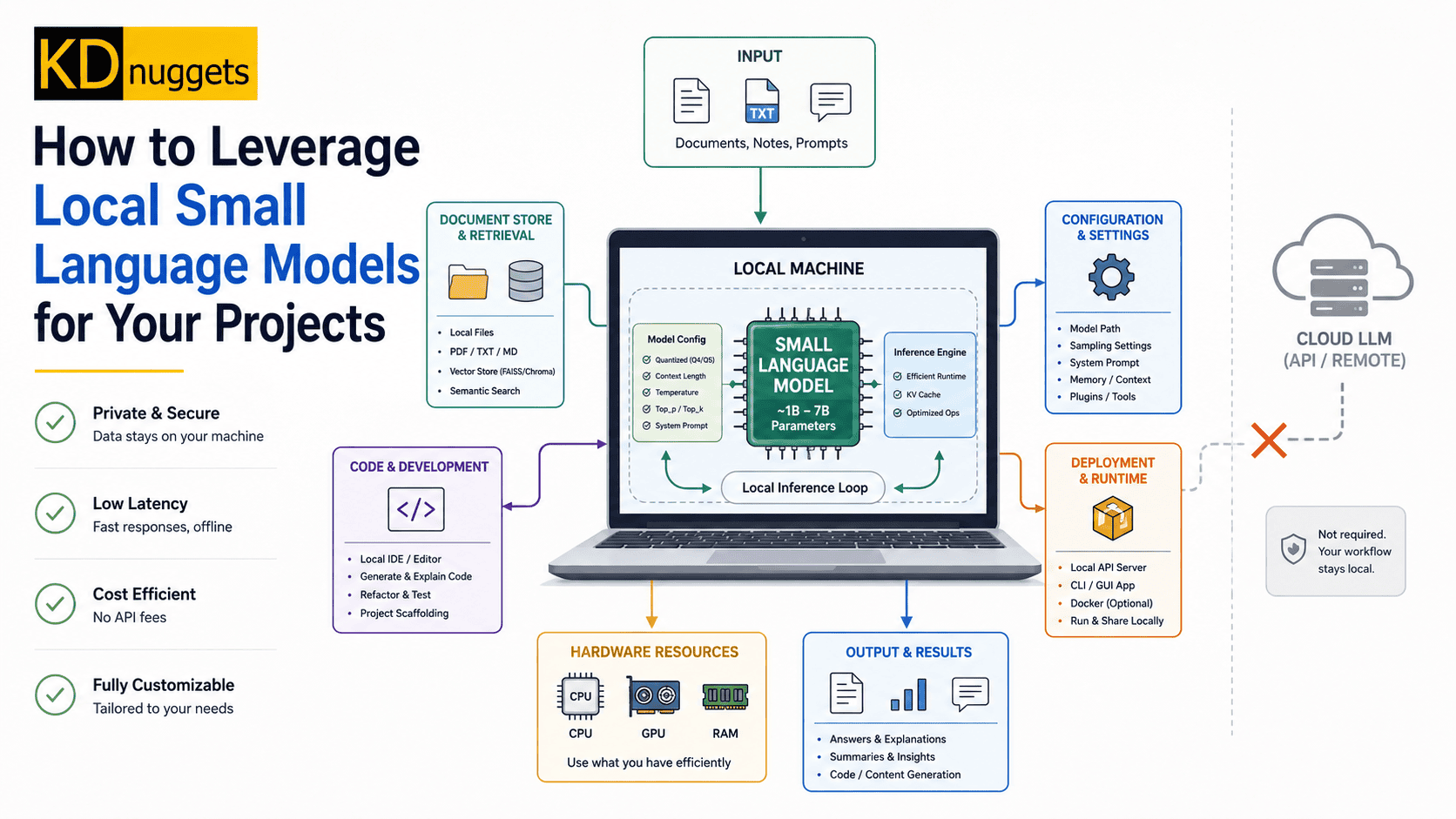
The rise of local Small Language Models (SLMs) represents a significant shift in the AI landscape, moving away from the centralized, cloud-dependent models that have dominated recent conversations. The article's practical guide to running these compact models on personal hardware is timely and relevant, addressing a growing need for greater control, privacy, and efficiency in AI applications. We've seen increasing scrutiny of data governance and security – as highlighted by Microsoft Moves AI Governance From Policy to Runtime Enforcement, and the ability to keep sensitive data and processing local is a crucial advantage. This isn’t just about cost savings, although those are certainly a benefit; it’s about empowering developers and organizations to build AI solutions that are truly aligned with their specific needs and risk tolerances. The promise of faster inference speeds and reduced latency, stemming from eliminating the network dependency, is also a compelling factor, particularly for real-time applications.
The trend towards smaller, more specialized models is a natural evolution. While massive models continue to capture headlines, their sheer size presents accessibility and operational hurdles for many. The ability to leverage SLMs allows teams to experiment and iterate more rapidly, integrating AI capabilities directly into existing workflows without relying on external infrastructure. This resonates with the approach championed in our recent article on utilizing Grok Build, Build an End-to-End Data Science Project with Grok Build and Grok 4.6, where streamlining the data science pipeline is paramount. The focus on privacy and data sovereignty is increasingly important, especially as regulations surrounding AI data usage become more stringent. This shift empowers organizations to maintain greater control over their data, mitigating compliance risks and fostering trust with their users.
However, the transition to local SLMs isn't without its challenges. While the article rightly focuses on the practical aspects of deployment, it’s important to acknowledge the ongoing need for robust tooling and support. Managing and optimizing these models on diverse hardware configurations will require new skillsets and potentially, specialized platforms. Furthermore, the performance of SLMs, while improving rapidly, still lags behind their larger counterparts in certain complex tasks. The conversation about AI isn’t just about technology; it’s about human collaboration, a point emphasized in our discussion of brownfield codebases and the value of mob programming Podcast: The Human Edge: Why Brownfield Codebases Need Mob Programming, Not Just AI Vibes. Ensuring that human expertise remains central to the development and deployment of these models is crucial for maximizing their potential and avoiding unintended consequences.
Ultimately, the emergence of local SLMs represents a democratization of AI. It moves power away from a select few large tech companies and puts it into the hands of individuals and organizations who want to build AI solutions that are tailored to their unique needs and values. As hardware becomes more powerful and efficient, and as SLMs continue to evolve, we can expect to see even broader adoption of this approach. A key question to watch will be how the open-source community rallies around these models, developing standardized tools and best practices that further lower the barrier to entry and unlock their full potential. Will we see the rise of a vibrant ecosystem of specialized SLMs, each optimized for a particular domain or task, and how will this impact the future of AI development?
Read on the original site
Open the publisher's page for the full experience