7 Common Python Mistakes to Avoid in AI Workflows
Our take
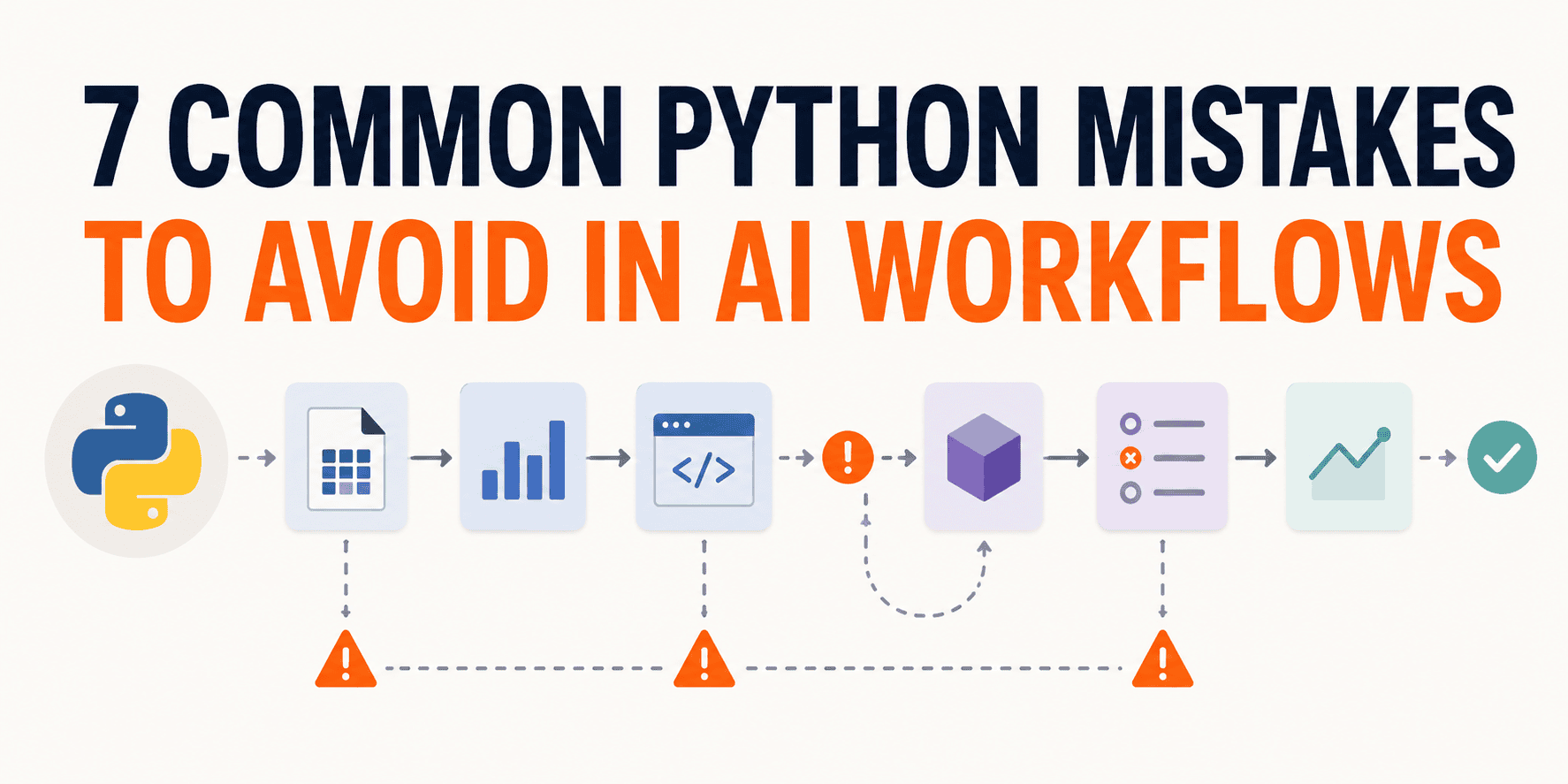
The recent article highlighting seven common Python mistakes in AI workflows struck a chord, and for good reason. It underscores a critical truth often overlooked in the rush to deploy AI models: a successful execution doesn’t equate to a reliable or trustworthy outcome. As the article aptly points out, a clean run simply confirms the process completed; it offers no insight into the data used for training, the state of the model, or the integrity of the resulting predictions. This resonates deeply within the current landscape where organizations are aggressively pursuing AI adoption, often prioritizing speed over rigor. We’ve seen this firsthand, as evidenced by the increasing need for robust infrastructure management—a need HashiCorp is addressing with their positioning of HCP Terraform [HCP Terraform Positions Itself as the Control Plane for AI-Driven Infrastructure]. The focus should be on building a foundation for reliable AI, not just rapid deployment.
The emphasis on meticulous data handling and validation is particularly relevant given the discussions surrounding local LLMs. While the allure of proprietary models and their raw power is undeniable, as explored in [5 Best Local LLMs You Can Run on a Mac mini in 2026], the ability to configure and control these models locally introduces a new layer of responsibility. Ensuring the training data is clean, representative, and properly managed becomes paramount. Furthermore, the ongoing evolution of the data science skillset highlights the importance of these foundational principles. The ability to not just build models but also to critically evaluate their performance and ensure data integrity will be essential for data scientists, as detailed in [5 AI Skills That Will Keep Data Scientists Relevant in 2027]. Moving beyond simply coding, data scientists need to become stewards of data quality and model reliability.
The mistakes outlined in the article – things like improper error handling, neglecting data validation, and failing to track experiment versions – are symptomatic of a broader trend: a focus on the “magic” of AI while neglecting the engineering rigor required to build reliable systems. This isn’t a criticism of the technology itself, but rather of the prevailing mindset. The current emphasis on rapid iteration and deployment often leads to shortcuts in data management and validation, creating a ticking time bomb of potentially flawed AI systems. Addressing these issues requires a shift in perspective, one that prioritizes robust data pipelines, rigorous testing, and comprehensive monitoring. It's about recognizing that AI is not a black box but a complex system that requires careful engineering and constant vigilance.
Ultimately, the conversation surrounding these Python pitfalls highlights a fundamental challenge for the AI industry: moving beyond the hype and embracing a more pragmatic approach. The future of AI isn't about building increasingly complex models, but about building reliable, trustworthy systems that can be integrated seamlessly into existing workflows. As AI becomes increasingly embedded in critical decision-making processes, the ability to validate data, track model lineage, and ensure reproducible results will become not just desirable, but essential. What processes and tooling will emerge to fundamentally address the challenges of AI system validation and ongoing trustworthiness beyond the initial development phase, and how will organizations adapt to prioritize these considerations alongside speed and innovation?
Read on the original site
Open the publisher's page for the full experience