Top 10 Skills for Claude Code and Codex CLI
Our take
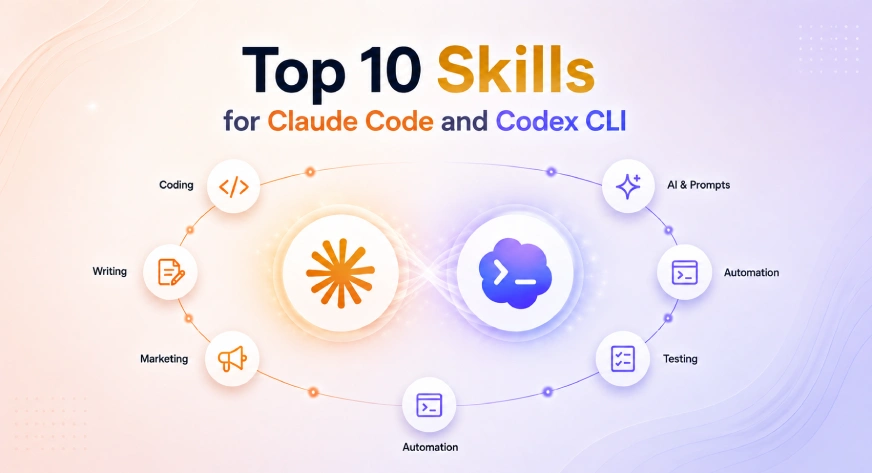
The recent Analytics Vidhya piece outlining the top 10 skills for leveraging Claude Code and Codex CLI highlights a crucial shift in how we approach AI-powered coding assistance. It’s a welcome move away from the breathless hype surrounding raw AI capabilities and towards a more pragmatic understanding of what it *really* takes to derive value. The core insight – that true skill lies not in simply extracting answers from AI but in guiding it effectively and integrating its output into actionable workflows – resonates deeply. We’ve seen similar themes emerge in discussions around data agents, as demonstrated in [I Built an AI Data Agent Which Can Query Data and Answer Business Questions. Here’s How.], emphasizing the importance of structured interaction and clear context. This aligns with observations about the limitations of benchmark scores alone, as highlighted by [Qwen 3.8-Max and Claude Opus 5 show why raw benchmark scores don't predict the bill.], where raw performance doesn’t always translate to practical, cost-effective solutions. The focus on context and actionable output is the key to unlocking the true potential of these tools, moving beyond experimentation into reliable productivity gains.
The listed skills, encompassing prompt engineering, iterative refinement, and output validation, underscore a fundamental truth: AI isn't a replacement for human expertise, but an augmentation of it. It requires a new set of skills – a blend of technical understanding and strategic thinking – to effectively harness its power. This isn’t about becoming an AI whisperer, but rather about learning to communicate your requirements clearly and critically evaluate the results. The emphasis on budgeting and requirement fulfillment is particularly important. Organizations are rightly scrutinizing the costs associated with AI adoption, and the ability to steer these tools towards specific, measurable outcomes is essential for justifying the investment. This is increasingly relevant as we see the rise of personalized AI experiences, exemplified by [Ex-Spotify employees raise $10M to bring the AI behind its recommendations to e-commerce], where tailoring AI's behavior to individual preferences and business goals becomes paramount.
The shift towards skill-based mastery, rather than simply chasing the latest model release, represents a maturing of the AI landscape. Early adopters were often focused on the "wow" factor, experimenting with impressive but ultimately impractical applications. Now, the focus is shifting towards building sustainable workflows that deliver tangible value. This requires a deeper understanding of the underlying technology and a willingness to invest in training and development. The Analytics Vidhya article’s list serves as a valuable roadmap for this journey, providing a practical framework for building the necessary skillset. It’s a move away from the generalized “AI adoption” conversation and towards a more targeted approach, identifying the specific competencies required to succeed in this new era of AI-assisted development.
Looking ahead, the ability to effectively guide and integrate AI-powered coding tools will become an increasingly valuable differentiator. As models continue to evolve and become more sophisticated, the need for skilled practitioners who can translate business needs into actionable prompts and validate the results will only intensify. The question isn’t whether AI will transform software development, but rather how quickly organizations can adapt and equip their workforce with the skills necessary to thrive in this evolving landscape. Will we see the emergence of specialized roles focused solely on AI prompt engineering and output validation, or will these skills become integrated across existing development teams?
The real skill isn’t getting AI to answers! But to do so in a manner that fits our budgets and fulfils our requirements. It’s guiding it with clear context and turning its output into useful action. This list is built around a simpler idea. Instead of searching through thousands of skills, you start with the […]
The post Top 10 Skills for Claude Code and Codex CLI appeared first on Analytics Vidhya.
Read on the original site
Open the publisher's page for the full experience